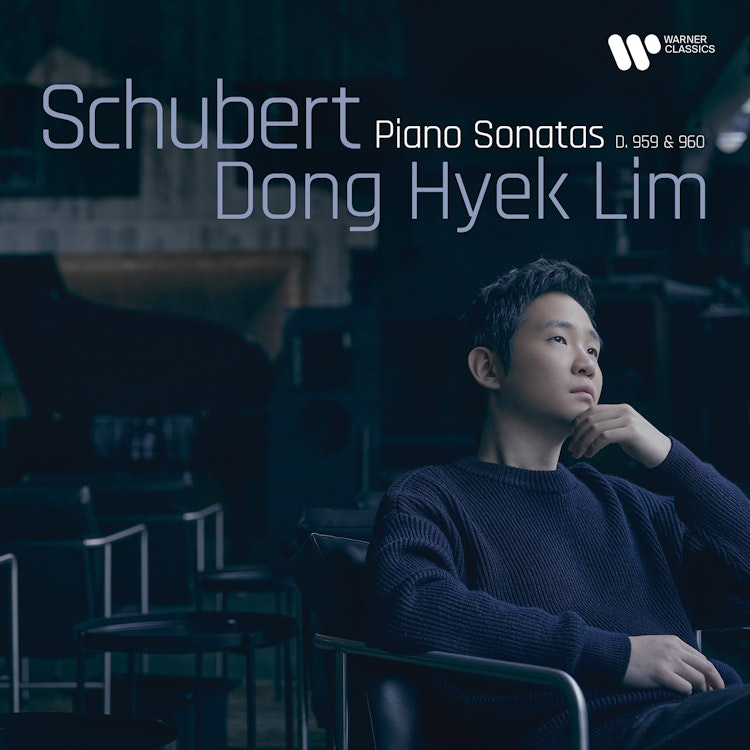
Schubert intended to dedicate these sonatas to Johann Nepomuk Hummel, a prominent pianist in Vienna, but they were published posthumously in 1839 with a dedication to Schumann.
Compositional Technique
Schubert repurposed classical sonata form by lessening the tonic-dominant tension and using forms as templates for exploring melodies rather than for strict structural necessity.
Composer Biography
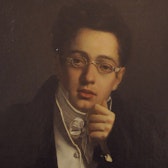
Schubert's last year, at age 31, was marked by an extraordinary output of masterpieces despite him suffering terribly from syphilis and typhoid fever.
Critical Reception
These sonatas were not widely performed until nearly a century after their composition, when Artur Schnabel and Eduard Erdmann championed them in the 1920s.
Compositional Technique
The slow movements of these sonatas are deeply profound, with the Andantino of D.959 featuring an 'eruption of the irrational' that Alfred Brendel called 'daring and terrifying'.
Critical Reception
Many 19th-century musicians, including Schumann, found Schubert's music, particularly these last sonatas, to be too long.
Composition History
Schubert completed his last three piano sonatas, D. 958, 959, and 960, in September 1828, only weeks before his death.
You might also enjoy...
Schubert: Piano Sonata No. 6 in E Minor, D. 566: I. Moderato
Schubert
Schubert: Piano Works, Vol. 2
Schubert: Piano Sonatas Vol. I
Schubert: The Three Posthumous Sonatas
Schubert: Piano Sonatas, D. 157, 537 & 566
Schubert: Piano Sonatas Nos. 16 & 21
Schubert: Piano Sonatas Nos. 4 & 9
Schubert: Piano Sonata No. 13 in A Major, D 664 (Op. posth. 120) [Concours Géza Anda 2024, Live]
Schubert: Piano Sonatas, D. 958 & 960
Schubert, F.: Piano Sonatas, D. 845, 850
Schubert: The Complete Sonatas and Major Piano Works, Volume 3 - The Power of Fate
SCHUBERT: Piano Sonatas, D. 959 and D. 840, 'Reliquie'
Schubert: Piano Sonata in D Major, D. 850, Op. 53 "Gasteiner"