During his time at the Zelész estate in Hungary (now Želiezovce in Slovakia), Schubert was exposed to Hungarian and Slavic folk music, played by Romani people and sung by peasants and maids.
Performer Biography
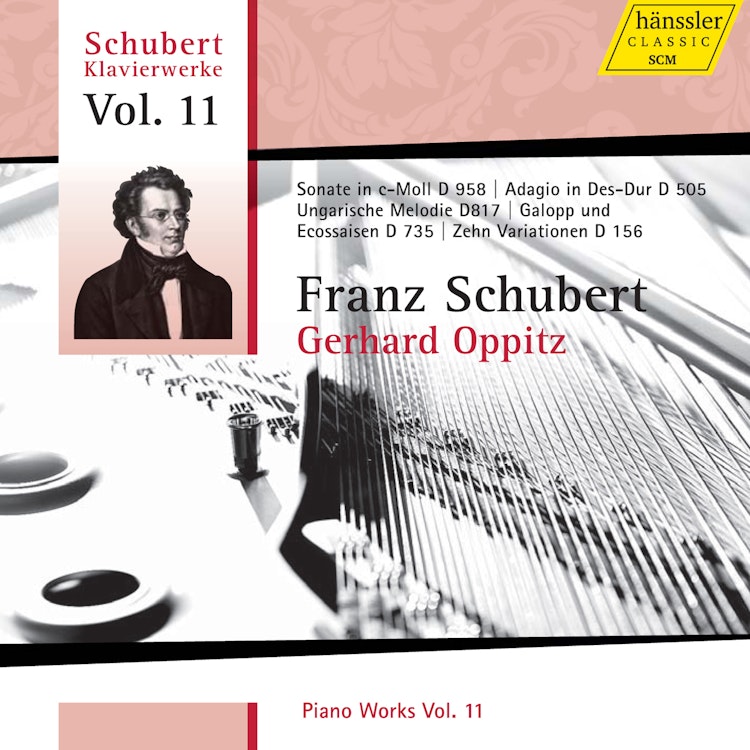
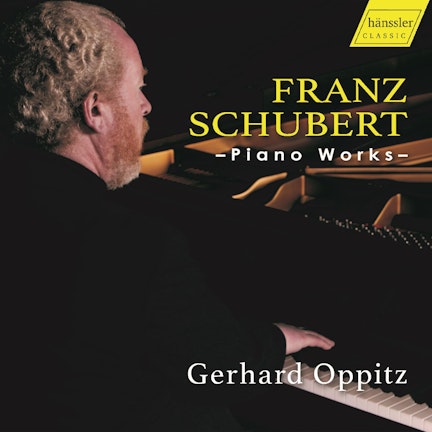
Gerhard Oppitz, the pianist on this album, began playing piano at age five and debuted with Mozart's Piano Concerto in D Minor at age eleven.
Composer Biography
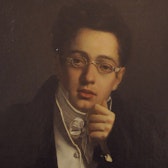
After a falling out with his father in 1817, Schubert lost his teaching position and became dependent on wealthy friends and patrons, including Count Johann Carl Esterházy, for whom he worked as a music teacher.
Composition History
Schubert's 'Ungerische Melodie' for piano was inspired by a plaintive melody he heard a kitchen maid singing in Zelész, which he later developed into the finale of his 'Divertissement à la Hongroise'.
Performer Biography
Gerhard Oppitz won first prize at the Arthur Rubinstein Competition in Israel in 1977, with Arthur Rubinstein himself heading the jury, marking the start of his worldwide concert career.
Composition History
Schubert's last three sonatas, written in his final year, were long thought to have been composed in a few weeks of intense creativity, but extensive drafts show he worked on them for several months.
Critical Reception
The trio of sonatas from Schubert's last year, 1828, struggled to find an audience for a long time, even with Robert Schumann, a great admirer of Schubert, who did not fully recognize their artistic value.
You might also enjoy...
Schubert: Wandererfantasie
Schubert, F.: Piano Music (Scherzi and Unknown Piano Pieces)
Schubert: Piano Sonatas, D. 566, D. 613 (612) & Other Pieces
Schubert: The Complete Piano Works for 2 Hands, Vol. 4
Schubert: The Complete Piano Works for 2 Hands, Vol. 8
Malan, Petronel: Transfigured Mozart
Encores After Beethoven
Hummel: Piano Works
Alfred Brendel: Steinway Legends
Alfred Brendel: Steinway Legends
Soirées de Vienne
Schubert: Piano Works
Schubert: Piano Works
Stravinsky: L'œuvre pour piano solo, vol. 2. Trois mouvements de Pétrouchka, Piano-Rag Music & Tango