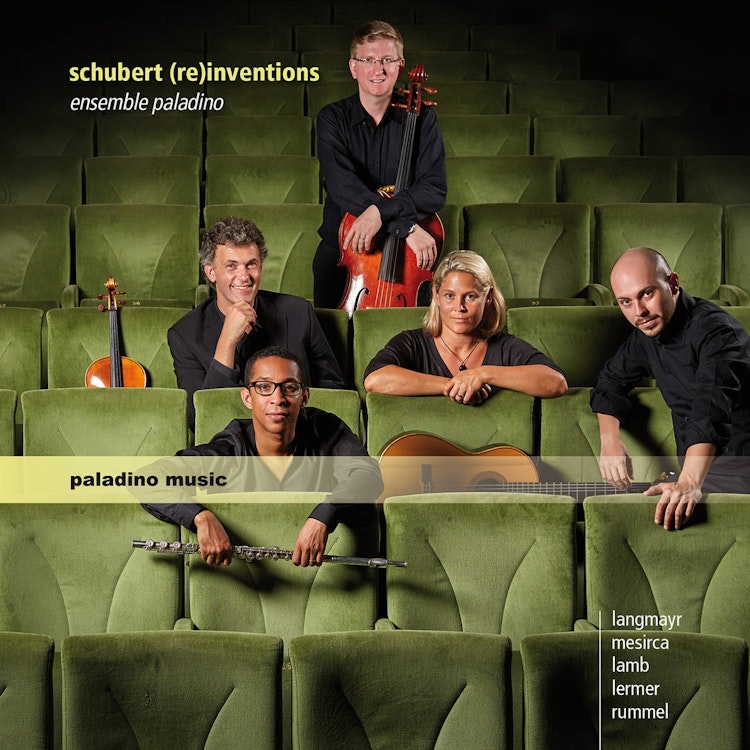
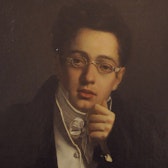
The first publishing house to engage Schubert, Cappi & Diabelli, published his monumental ballad 'Erlkönig' in a version for voice and guitar, presumably with the composer's consent.
Composition History
A vocal trio with integral guitar accompaniment, 'Kantate zur Namensfeier des Vaters' (D 80), exists in Schubert's autograph manuscript, likely written in 1813 to celebrate his father's name day.
Historical Context
The publication of Schubert's Lieder with guitar accompaniment was more economical, requiring less paper and costing about 25 percent less to print, making them easier for publishers to sell.
Composer's Artistic Vision
Franz Schubert considered the guitar a chamber music instrument, as respectable as any other, and a clever means of disseminating his works.
Instruments
The arpeggione, for which Schubert wrote his Sonata in A minor, D 821, was an invention of Viennese instrument maker Johann Georg Staufer, described as having an upper register like an oboe and a lower register like a basset horn.
Composition History
A significant Schubert manuscript, found in 1918, was initially thought to be an original composition but was later identified as an arrangement of a 'Trio' by Wenzel Matiegka, with Schubert adding a cello part and modifying the viola part.
Interpretation
Cellist Martin Rummel believes that in the 'Arpeggione Sonata', a cellist should play the bass notes missing on the arpeggione as Schubert wrote them in the original exposition, adapting the transcription to the cello's characteristics.
You might also enjoy...
Tchaikovsky: Songs Vol.1
Chère nuit: French Songs
Maszyński: Songs
Preludios
Schubert : Lieder
Schubert: Lieder
American Songs
The Great EMI Recordings - German Lieder: Schubert, Mendelssohn, Schumann, Brahms