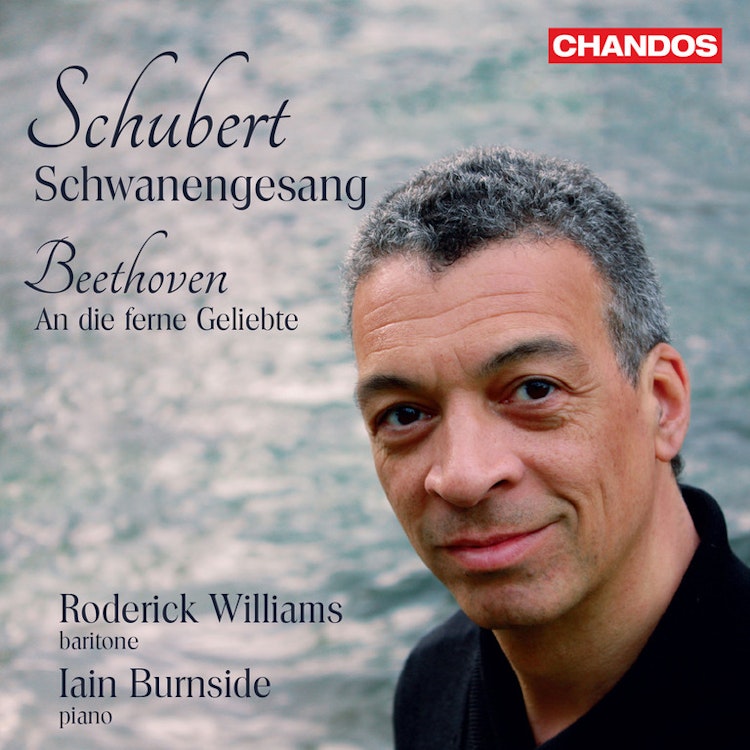
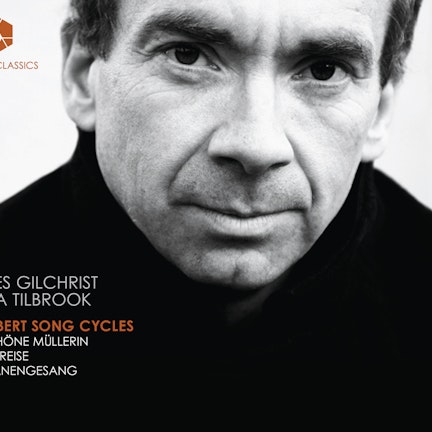
Schubert: Schwanengesang, D. 957 – Beethoven: An die ferne Geliebte, Op. 98
5/1/2020, 20 Tracks, 1:05:13
Gramophone Editor's Choice
Featuring
Roderick Williams
Iain Burnside
Ludwig van Beethoven
Franz Schubert
Did you know?
1/7
Performer Biography
Iain Burnside, the pianist, has performed with many leading singers, has an eclectic recording repertoire, and is also a writer and broadcaster who won a Sony Radio Award for his work on BBC Radio 3.
Interpretation
For this recording, the performers chose different soundscapes for the two works: in Beethoven's An die ferne Geliebte, the voice is set slightly more distantly to highlight the piano's inventiveness, while Schubert's Schwanengesang is recorded more traditionally with equal partnership between voice and piano.
Compositional Technique
Beethoven's song cycle, An die ferne Geliebte, pioneers a form where disparate songs are connected by piano passages that establish new keys, with the final song revisiting the key and theme of the first.
Performer Biography
Roderick Williams, the baritone on this recording, is a sought-after performer in opera, concert, and recital, and has premiered works by several contemporary composers.
Composition History
Schwanengesang is not a standard song cycle by Schubert's intention, but rather a compilation of songs left by him at his death, assembled by his publisher Tobias Haslinger.
Recording & Production
This Chandos recording utilizes 24-bit / 96 kHz technology, which offers a significantly greater dynamic range and resolution than standard 16-bit recordings, and aims to reproduce a better sound by capturing higher frequencies.
Composer's Artistic Vision
The poems set in Schubert's Schwanengesang by Heinrich Heine tend to reflect the bleaker themes of alienation found in Schubert's earlier Winterreise, while those by Ludwig Rellstab build on his pre-Winterreise experience.
You might also enjoy...
Schubert: Schwanengesang
Schubert: Schwanengesang & Die Post
Schubert: Schwanengesang - Beethoven: An die ferne Geliebte