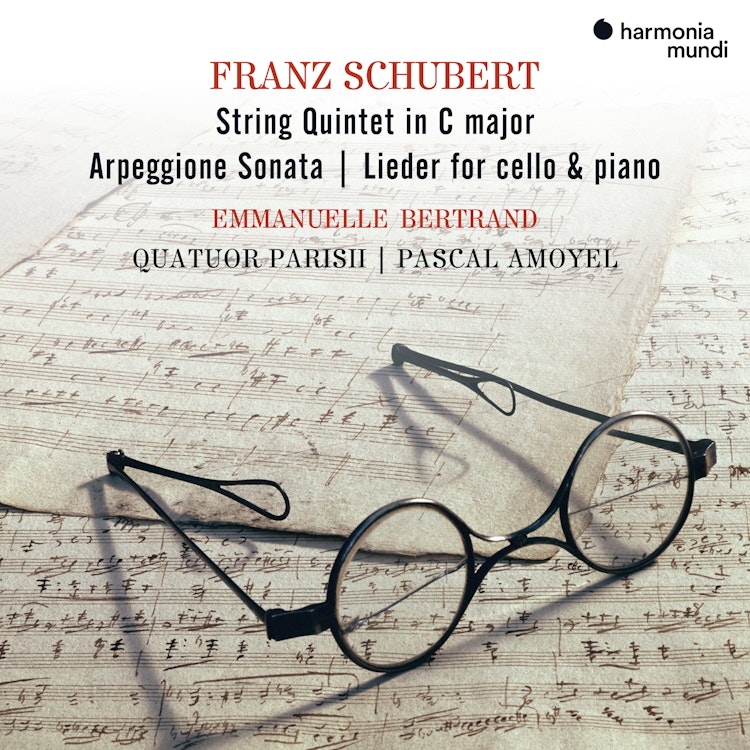
Schubert's String Quintet in C major, D. 956, was composed in his last year of life, marked by illness and a dwindling appetite for life, and was not publicly performed until 22 years after his death.
Composer's Artistic Vision
Schubert's late works, including the String Quintet, often feature profound ambivalence and vulnerability, with musical material constantly challenged, reflecting his self-questioning.
Composition History
Schubert's Arpeggione Sonata was a commissioned work, written in November 1824 for the arpeggione, a newly invented instrument by Viennese luthier Johann Georg Stauffer.
Instruments
The arpeggione, for which Schubert wrote his sonata, was a six-stringed, fretted bowed guitar, intended as a bridge between stringed and plucked instruments.
Notable Performances
The String Quintet in C major, D. 956, had its first public performance on November 17, 1850, twenty-two years after Schubert's death, by Josef Hellmesberger's Quartet with Josef Stránský on the second cello.
Critical Reception
Despite initial praise, the arpeggione instrument for which Schubert composed his sonata, ultimately failed to gain popularity due to its eccentric playing technique, with only two copies surviving today.
Interpretation
Emmanuelle Bertrand and Pascal Amoyel created their own transcriptions of Schubert's lieder for cello and piano, aiming for a balance between content, form, and respect for the original text.
You might also enjoy...
Vesper
Memento
Yellow Shore
Mizuno: Blue Bird (from "Naruto") [Arr. Telleria for Piano]
Doulcet: A Film by
Ravel: Daphnis et Chloé, Suite No. 2, M. 57b (Arr. for 2 Pianos by Vyacheslav Gryaznov): I. Lever du jour