The Napoleonic Wars, occupations of Vienna, and economic ruin marked a historical turning point that affected music, with the public turning away from demanding Classical genres and towards opera and concertos.
Recording & Production
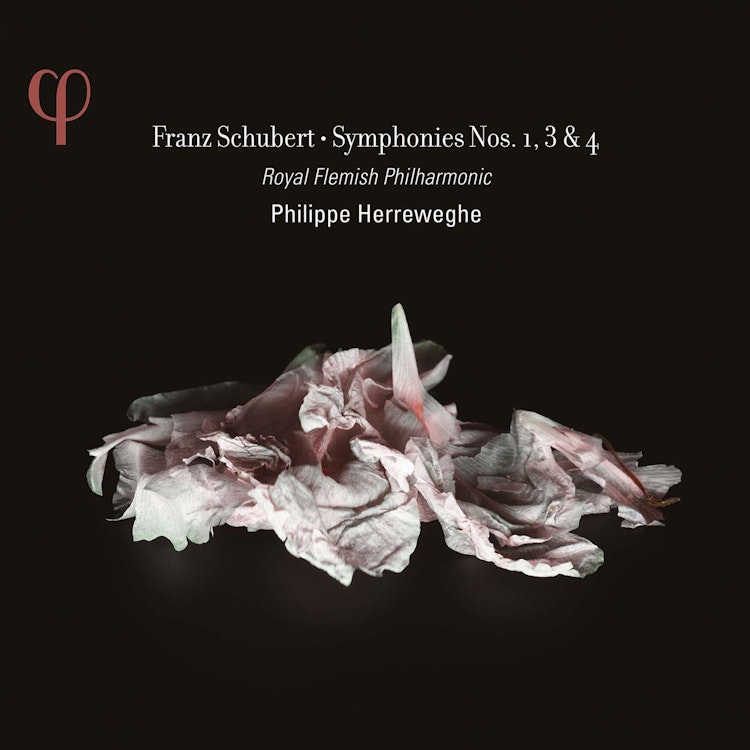
This album was recorded in June 2014 at deSingel, Antwerp, with Andreas Ruge as Balance Engineer and Andreas Neubronner handling recording, editing, and mastering.
Composition History
Schubert's first six symphonies, including those on this album, are often termed 'early symphonies,' written between his sixteenth and twenty-first years (1813-1818).
Critical Reception
Schubert's early symphonies were largely neglected, waiting until the second half or even final decades of the 19th century for public performance, leading to misunderstandings due to the changed musical landscape.
Performer Biography
Philippe Herreweghe, the principal conductor of the Royal Flemish Philharmonic, founded Collegium Vocale Gent in 1970 and La Chapelle Royale in 1977, and has amassed over a hundred recordings.
Composer Biography
Schubert, born in 1797, was a choirboy in the imperial chapel and held a scholarship to study at the Stadtkonvikt in Vienna, a secondary school with a rich music library and daily orchestra rehearsals.
Composer's Artistic Vision
Even in his early symphonies, Schubert sought originality, playing with the codes of his predecessors and the late 18th-century musical style, foreshadowing his mature style.
You might also enjoy...
Schubert: Symphonies, Vol. 1 – Nos. 3, 5 & 8
Schubert: Symphonies Nos. 5 and 8, "Unfinished"
Schubert: Unfinished & The Great Symphonies
Schubert: Symphonies Nos. 3, 5 and 8
Schubert: Symphony No. 3 in D Major, D. 200
Schubert: Complete Symphonies
Schubert: Symphony No. 8 in C Major, D. 944 "Great"
Schubert: Sinfonien 2 & 4
Schubert: Symphony No. 8 in B Minor, D. 759 "Unfinished" (Live at Ozawa Hall, Boston, September 2007)