The 'Arpeggione' Sonata was originally written for the arpeggione, a now-obsolete instrument with six strings and 22 frets, but is now popularly performed on the modern four-string cello.
Performer Biography
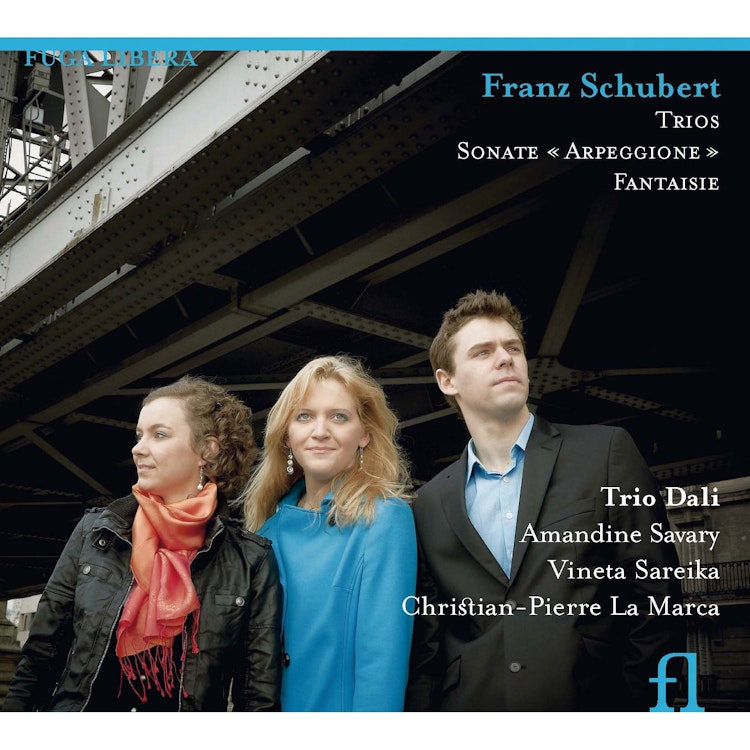
The Trio Dali, named after precious Asiatic marble, has won numerous international awards, including First Prizes at the Osaka International Chamber Music Competition and the Frankfurt Commerzbank International Keyboard Trio Competition.
Composition History
Schubert composed the two trios (D898 and D929) and the Fantasia for violin and piano (D934) in quick succession after completing his song cycle Winterreise, partly to prepare for his first and last public concert in Vienna in March 1828.
Instruments
Vineta Sareika, the violinist, plays a 1690 Matteo Goffriller violin, and Christian-Pierre La Marca, the cellist, plays a 1700 Matteo Goffriller cello that once belonged to the Amadeus Quartet.
Composer's Artistic Vision
Schubert's chamber works from this period, including the trios and Fantasia, are characterized by extreme technical difficulty, particularly the Fantasia D934, which many performers still avoid.
Composition History
The 'Arpeggione' Sonata was written for the arpeggione, a guitar-cello invented by Viennese instrument-maker Johann Georg Staufer, and was performed privately with Schubert at the piano in late 1824.
Composer Biography
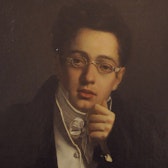
In late 1827, Franz Schubert's health was deteriorating due to venereal disease and mercury treatments, leading to renewed headaches and flagging morale.
You might also enjoy...
Schubert: Chamber Works
Schubert
Schubert: Piano Trio No. 2 in E-Flat Major, D. 929 & Arpeggione Sonata in A Minor, D. 821