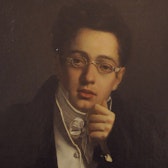
Schubert later discovered the complete collection of Wilhelm Müller's poems for "Winterreise" and appended the additional twelve songs to his original set, rather than reordering them.
Compositional Technique
A crucial structural element in "Winterreise" is Schubert's use of major-minor symbolism, where the minor mode represents grim reality and the major mode signifies dream, delusion, or remembered bliss.
Composition History
Schubert initially presented only the first twelve songs of "Winterreise" to his friends, believing the cycle was complete.
Cultural Impact
The "grim journey" of "Winterreise" was a favorite work of playwright Samuel Beckett and composer Benjamin Britten, who ranked it among the twin peaks of Western music alongside Bach's B minor Mass.
Performer Biography
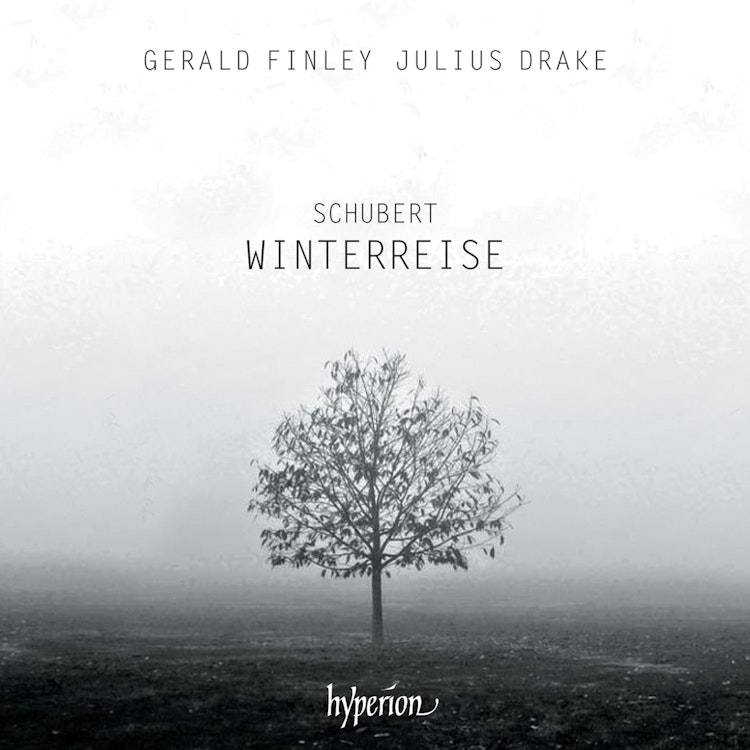
Julius Drake, the pianist on this recording, specializes in chamber music and has served as Artistic Director for the Perth International Chamber Music Festival and the Machynlleth Festival.
Composer's Artistic Vision
Schubert's "Winterreise" introduced a new level of sustained pessimism and obsessive exploration of a disturbed mind, which distinguished it from his earlier, more pathetic songs.
Performer Biography
Gerald Finley, the baritone on this recording, is a multiple Gramophone Award winner and a Grammy winner, known for his work in opera and for championing new repertoire.
You might also enjoy...
Schubert: Winterreise
Schubert: Winterreise, Op. 89, D. 911 (Arr. for Baritone & Piano)