Schulhoff's progressive and cosmopolitan versatility, characterized by his oscillation between 'high' and 'low' art forms, was condemned by the National Socialists as 'cultural Bolshevism' and 'degenerate art'.
Composer's Artistic Vision
Schulhoff's creativity was characterized by an insatiable curiosity and a willingness to experiment with diverse artistic and political ideas, which he then integrated into his unique musical idiom.
Performer Biography
András Adorján, the flautist on this recording, is one of the best-known flautists of his generation, with over 100 records and CDs to his name, and he studied music after qualifying as a dentist.
Composer Biography
As a boy, Schulhoff was introduced to Antonin Dvořák, a renowned Czech composer, who wrote a glowing recommendation for the young prodigy.
Composer Biography
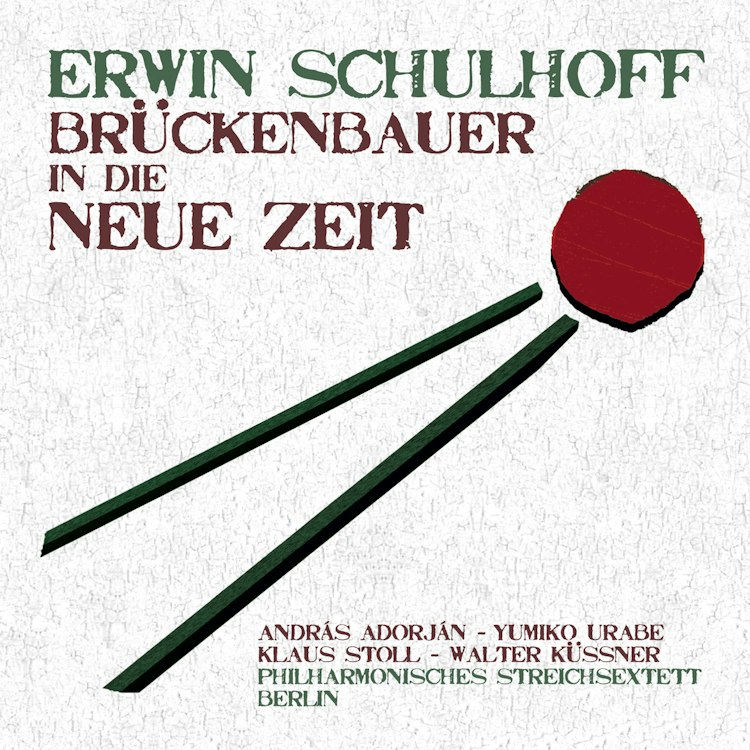
Erwin Schulhoff, a versatile and imaginative composer, had his career and life tragically cut short in 1942 in a Nazi internment camp.
Composer Biography
During his time in Berlin in the 1920s, Schulhoff earned his living primarily by playing piano in swing dance and cabaret nightclubs, influences that strongly shaped his compositions from that period.
Historical Context
Schulhoff's ultimate demise was not due to his Jewish ancestry, but because he was a Soviet citizen in German-controlled territory after the Hitler-Stalin pact broke down, leading to his arrest.
You might also enjoy...
Concertos et Symphonies concertantes
Sessions: Symphony No. 3; Lees: Concerto for String Quartet and Orchestra
Flöte und Klavier
Mozart & Flute in Paris - Fauré: Fantaisie, Op. 79 (Arr. Aubert)
Acceso mio cuore (Ciaconna)
Kaminski: Werk für Streichorchester
Marais, M.: Semele [Opera]
Roesgen-Champion: Concertino for Harpsichord and Orchestra No. 1
Reinecke: Piano Quartets & Piano Quintet
Bernardi: Motetti in cantilena
Rosenberg: Concertos for Strings Nos. 1 and 4 & Svit over svenska låtar