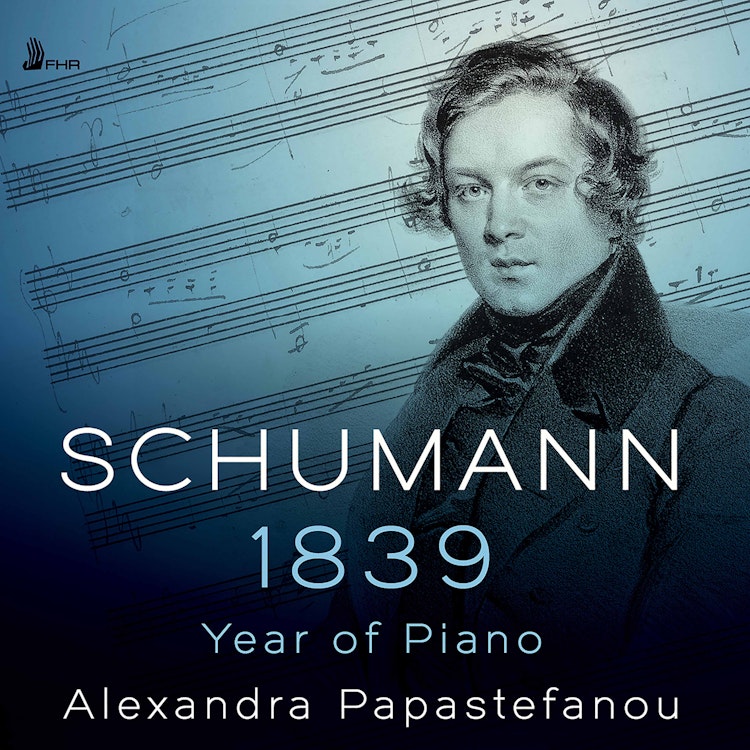
All the piano compositions in this album were written in 1839, a turbulent year for Robert Schumann leading up to his marriage to Clara Wieck.
Performer Biography
Alexandra Papastefanou, the pianist on this recording, was a finalist at the 1985 Clara Haskil Competition and has received multiple international awards.
Composer's Artistic Vision
Schumann described his Arabeske, Op. 18 and Blumenstück, Op. 19 as "lighter, more feminine in style" and aimed to become a popular composer with amateur female pianists in Vienna.
Composition History
Schumann's Faschingsschwank aus Wien, Op. 26, subtitled 'Fantasy Pictures', includes a musical reference to the Marseillaise, which was banned in Vienna at the time due to the political situation.
Composer Biography
Robert Schumann met Friedrich Wieck, a self-taught music teacher, in Leipzig in 1828 and was impressed by Wieck's nine-year-old daughter, Clara, a child prodigy.
Composition History
While composing his Nachtstücke, Op. 23, Schumann claimed to have visions of despairing people and funeral processions, leading him to initially title it 'Corpse Fantasia'.
Critical Reception
Clara Schumann, the composer's wife and a renowned pianist, dissuaded Robert from using the title 'Corpse Fantasia' for his Nachtstücke, Op. 23, suggesting it would irritate the public.