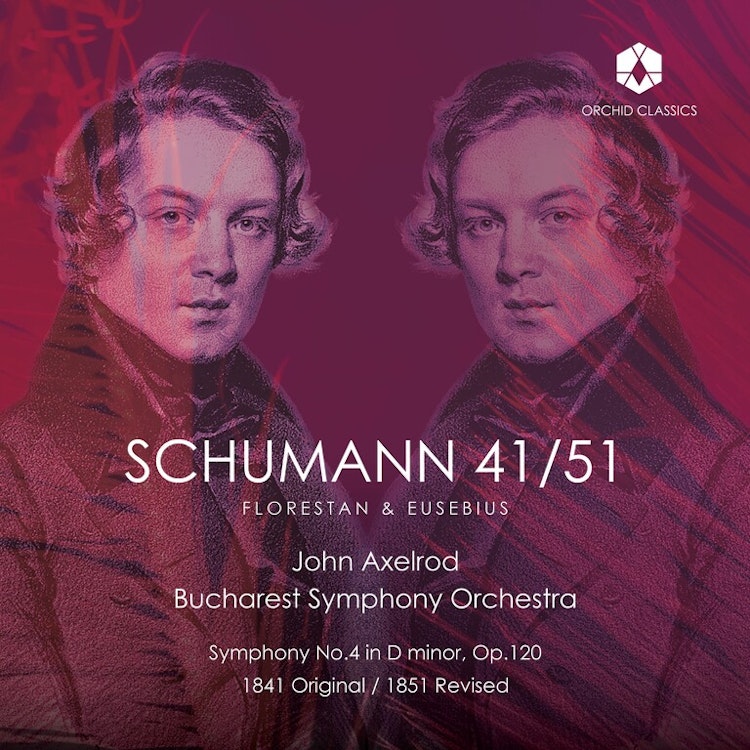
Robert Schumann's Symphony No. 4 was composed during his 'Year of the Symphony' in 1841, a productive period that also saw the birth of his daughter and his first wedding anniversary to Clara Schumann.
Recording & Production
This recording is presented as a unique discography that includes both the 1841 and 1851 versions of Schumann's Symphony No. 4.
Critical Reception
The 1841 premiere of Schumann's Symphony No. 4 was not a success, partly because the conductor, Ferdinand David, struggled to convey its innovative structure of continuous movements.
Composer Biography
Johannes Brahms, Schumann's protégé, championed the original 1841 version of the symphony, believing it superior to the revised 1851 version, which caused conflict with Clara Schumann.
Compositional Technique
In Schumann's Symphony No. 4, the solo oboe and cello in the second movement represent Clara and Robert, while the solo violin portrays their intimate promenades.
Composer's Artistic Vision
Schumann intended his Symphony No. 4 to be performed without pauses between movements, portraying a narrative story, which is understood to be his and Clara's romance and their struggle to marry.
Composer Biography
Robert Schumann identified himself with 'Florestan the wild' and 'Eusebius the mild,' reflecting a bipolar condition that influenced his music, with the 1841 symphony influenced by Florestan and the 1851 revision by Eusebius.
You might also enjoy...
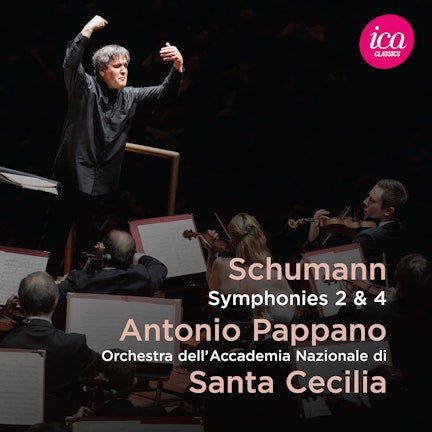
Schumann: Symphonies 3 & 4
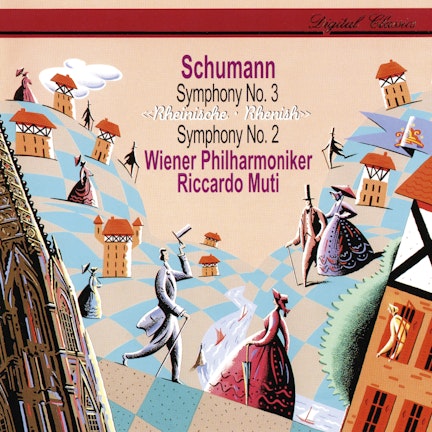
Schumann: Symphony No. 2, Op. 61
Schumann: Symphonies Nos. 1 & 4
Schumann: Symphonies Nos. 1 & 4
Schumann: Symphonies Nos. 3 & 4
Schumann: Symphonies Nos. 1 & 3
Schumann: Symphonies
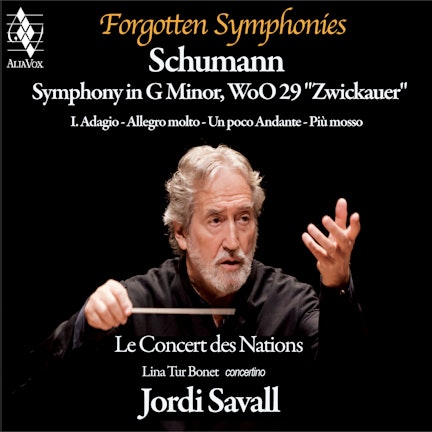
Symphony in G Minor, WoO 29 "Zwickauer": I. Adagio - Allegro molto - Un poco Andante - Più mosso