The recording uses a Stephen Paulello 'Opus 102' piano, chosen for its Romantic-era qualities and its ability to facilitate dialogue between violin and piano while maintaining their independence.
Composition History
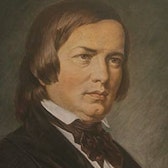
Robert Schumann's 3rd Violin Sonata in A minor was created by transforming the F.A.E. Sonata, with Schumann replacing movements by Dietrich and Brahms with his own compositions.
Composer Biography
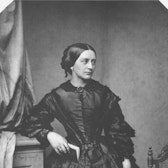
Clara Schumann, a pianist, composer, and teacher, was rarely satisfied with pianos until the Schumanns moved to Düsseldorf in 1850, where she found satisfaction with pianos made by Johann Bernhard Klems.
Album & Artwork
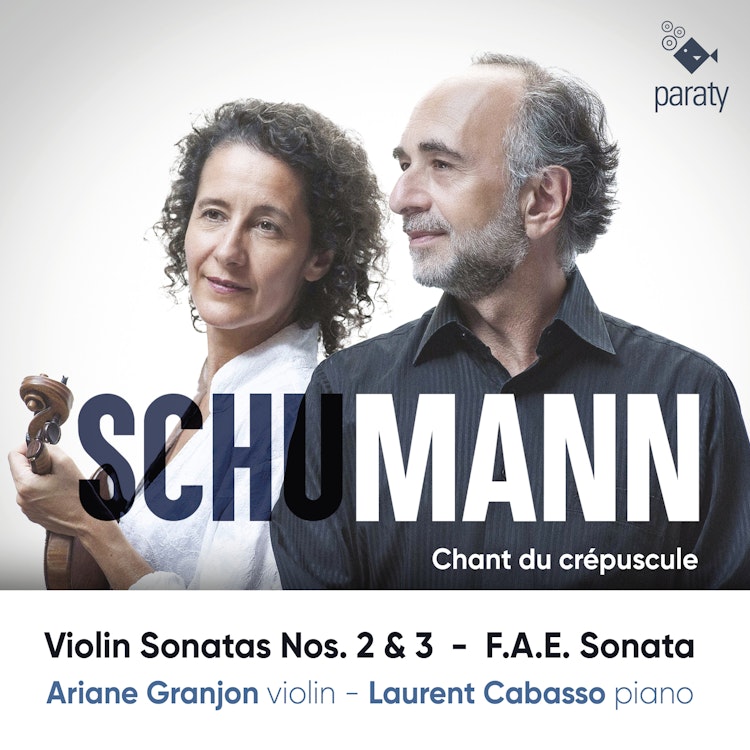
The album's title, "1853: Schumann, the twilight," refers to a pivotal year in Robert Schumann's life, marked by both creative intensity and the onset of his mental decline.
Composition History
Robert Schumann initially excluded his wife, Clara Schumann, a prodigy composer, from contributing to the collaborative F.A.E. Sonata, despite her active role in his musical life.
Composer's Artistic Vision
Robert Schumann was drawn to the idea of "half-light" or "Zwielicht," a concept German painters and poets used for ambiguous moments between day and night, reflecting his own state in his final fertile year.
Composition History
The F.A.E. Sonata was a collaborative work dedicated to violinist Joseph Joachim, with movements contributed by Robert Schumann, Albert Dietrich, and Johannes Brahms, based on Joachim's motto "Frei aber einsam" (Free but alone).
You might also enjoy...
Ode to Lost Time
Mendelssohn: Complete Violin Sonatas
Tchaikovsky: Complete Works for Violin & Piano
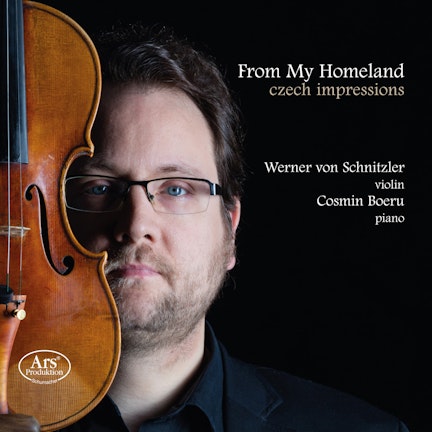
From My Homeland: Czech Impressions
Hartmann: Works for Violin and Piano (Complete)
Franck/Debussy/Enesco: Violin Sonatas
Bazzini: La Ronde des Lutins
Violin Recital: Little, Tasmin - Kreisler, F. / Bach, J.S. / Mozart, W.A. / Grieg, E. / Tchaikovsky, P.I. / Bartok, B. (Partners in Time)