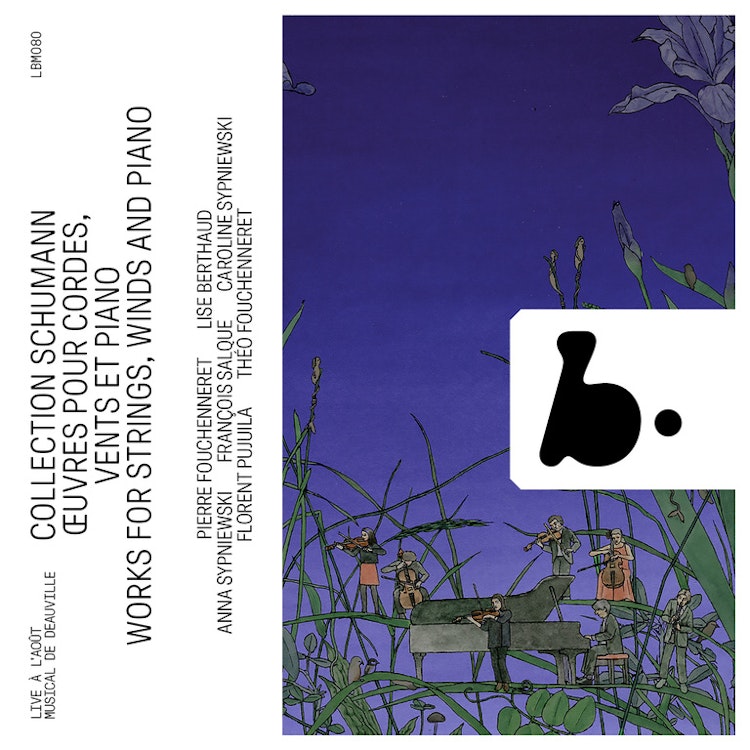
Schumann Collection: Works for Strings, Winds and Piano
9/19/2025, 27 Tracks, 1:58:14
Featuring
Théo Fouchenneret
François Salque
Florent Pujuila
Lise Berthaud
Pierre Fouchenneret
Anna Sypniewski
Caroline Sypniewski
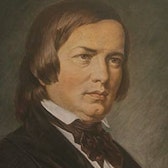
Robert Schumann
Did you know?
1/7
Interpretation
The performers believe Robert Schumann's style is particularly suited to live albums, emphasizing the warmth, urgency, and passion of a concert setting.
Compositional Technique
In 1849, Robert Schumann wrote five short pieces for cello 'im Volkston' ('in folk style'), demonstrating his particular attachment to his Germanic roots and language.
Composer Biography
Despite its quality, Robert Schumann chose not to include his early Quartet for Piano and Strings WoO 32 in his official catalogue, possibly due to its strong Schubertian influences.
Recording & Production
This album is part of a live series dedicated to Robert Schumann's music, following a previous complete chamber music recording of Johannes Brahms.
Composition History
Robert Schumann's early Quartet for Piano and Strings WoO 32 was composed around the time of Franz Schubert's death in 1828, which visibly upset the young Schumann.
Cultural Impact
In Robert Schumann's Märchenbilder Op. 113 and Märchenerzählungen Op. 132, the viola embodies the Romantic poet, a role established by Hector Berlioz in his 1834 work Harold en Italie.
Composer's Artistic Vision
Robert Schumann described himself as a 'Tondichter,' meaning 'sound poet' or 'tone poet,' reflecting his quest for a popular, poetic expressiveness in his music.
You might also enjoy...
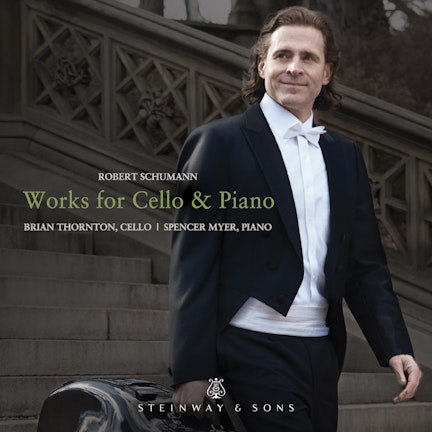
R. Schumann: Works for Cello & Piano
Schumann: Lieder ohne Worte
R. Schumann: Folies Romantique (Music for Bassoon and Piano)
Beyond
Schumann: Complete Music for Viola and Piano
Cello Recital: Bailey, Zuill - Francoeur, F. / Bach, J.S. / Beethoven, L. / Mendelssohn, F. / Chopin, F. / Vieuxtemps, H.