Schumann: Fantasia in C Major / Toccata / Beethoven: Piano Sonatas Nos. 13 and 14
1/1/2000, 11 Tracks, 1:06:53
Featuring
Eugene Mursky
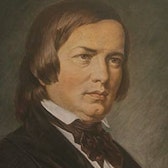
Robert Schumann
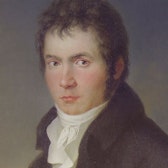
Ludwig van Beethoven
Did you know?
1/7
Composer Biography
Beethoven knew Mozart's operas and Bach's 'Well-Tempered Clavier' well, despite publicly claiming he avoided Mozart's music to protect his own style.
Compositional Technique
Beethoven's Piano Sonata No. 13, Op. 27, No. 1, is innovative for fusing its four movements into a greater whole with the direction 'attacca subito' (play straight on).
Composition History
Robert Schumann intended the proceeds from his Fantasie in C major, Op. 17, to help fund a monument to Beethoven in Bonn.
Composer's Artistic Vision
Robert Schumann felt constrained by strict sonata form, preferring the freer structure of the fantasia to express personal statements.
Compositional Technique
Robert Schumann's Toccata in C major, Op. 7, is considered one of the most difficult works in the entire piano literature.
Compositional Technique
In the last movement of his 'Moonlight' Sonata, Beethoven incorporated a theme from C.P.E. Bach's 'Württemberg Sonata' in A flat major, note for note.
Critical Reception
Beethoven himself was critical of his Piano Sonata No. 14, Op. 27, No. 2 (Moonlight), stating he had written better works.
You might also enjoy...
Early Romantic Piano Music
Icon: Artur Schnabel
Beethoven Edition, Vol. 6
Beethoven: Piano Music, Vol. 5
Georges Cziffra plays Beethoven, Schumann & Brahms
Melvyn Tan: Master & Pupil
Richter Archives, Vol. 24: Bach & Beethoven (Live)
C.P.E. Bach Edition, Vol. 1
C.P.E. Bach: The Complete Works for Piano Solo, Vol. 1
Weber: Piano Music, Vol. 4
Yuja Wang - The Verbier Festival Debut Recital 2008