Schumann's use of the title 'Fantasy Pieces' for several works reflects the Romantic idea that creative expression comes from the artist's unrestricted imagination and justifies sudden mood changes in the music.
Composition History
Schumann's Three Fantasy Pieces, Op. 73, were composed in just two days in February 1849 and were originally titled 'Soirée Pieces'.
Composition History
Schumann's Three Romances, Op. 94, originally for oboe and piano, were written in December 1849, a highly productive year for the composer, and were not the result of a commission.
Composer Biography
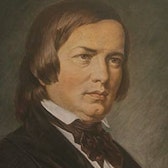
Robert Schumann, a German composer, is considered one of the greatest composers of the Romantic era and helped fill the lack of romantic repertoire for the clarinet.
Composer Biography
Mikhail Glinka, a representative Russian composer, composed his Trio pathétique in 1832 while studying in Italy, hoping the warmer weather would help his chronic chest condition.
Composition History
Glinka's Trio pathétique, composed in 1832, was influenced by Italian opera composers like Donizetti and Bellini, which explains its 'peculiarly un-Russian sounding' character.
Composition History
The title 'Trio pathétique' for Glinka's work might refer to an unrequited romantic attachment, as a note on the autograph score reads, 'I have known love only through the pain it brings.'