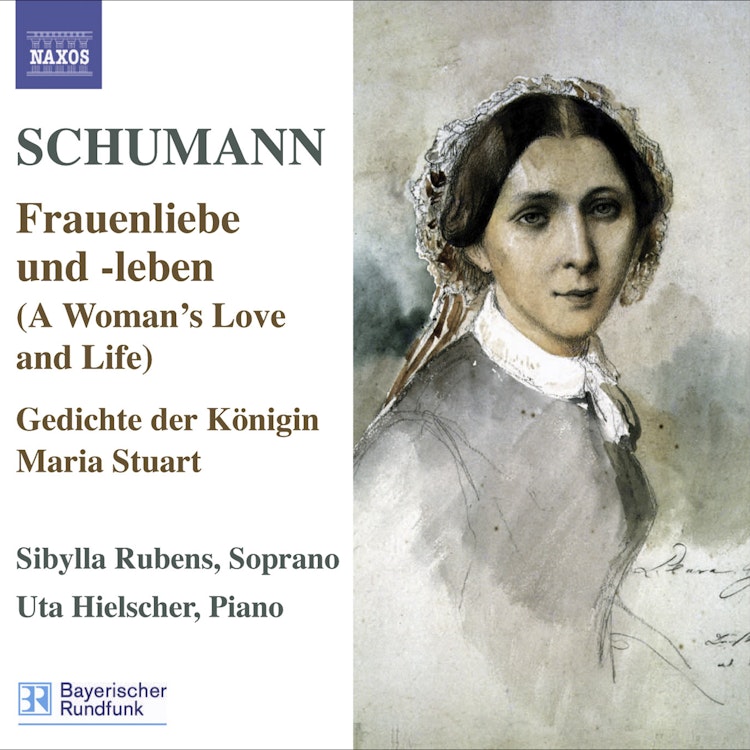
Schumann.: Lied Edition, Vol. 5: Frauenliebe Und -Leben, Op. 42 - Gedichte Der Konigin Maria Stuart, Op. 135 - 7 Lieder, Op. 104
4/28/2009, 26 Tracks, 46:38
Featuring
Sibylla Rubens
Uta Hielscher
Robert Schumann
Did you know?
1/7
Composition History
Schumann composed "Frauenliebe und -leben" in July 1840, a period when his marriage to Clara Wieck was becoming certain after a court case against her father.
Composer's Artistic Vision
Schumann's "Frauenliebe und -leben" reflects the 19th-century patriarchal view of women, where the female protagonist expresses submission and devotion to her beloved.
Composer Biography
Schumann was fascinated by the poetess Elisabeth Kulmann, whose portrait hung in his study, and he dedicated his Op. 104, "Seven Songs by Elisabeth Kulmann in Memory of the Poetess," to her.
Compositional Technique
Schumann's setting of "Frauenliebe und -leben" concludes with an extended piano postlude that refers back to the first song, expressing the idea of constantly returning to 'a woman's love'.
Critical Reception
Schumann's late vocal works, including some on this album, were viewed with suspicion by posterity, supposedly showing signs of flagging inspiration and psychological decline.
Compositional Technique
In "Frauenliebe und -leben," Schumann's music perfectly matches the poetry's emotional development, with tempo and intensity increasing from initial diffidence to passionate love.
Compositional Technique
In the "Mary Stuart Lieder," Op. 135, Schumann abandons memorable melodies for the voice, concentrating the musical language to an "elaborate simplicity" where the piano's role is largely accompaniment.
You might also enjoy...
Schumann: Liederkreis / Frauenliebe Und Leben
Schumann: Stille Liebe
Schumann: Liederkreis Op. 39, Lieder-Album für die Jugend
Schumann, R.: Dichterliebe / Liederkreis
Songs Of Schumann: LiederKreis Op. 24 & Lieder Op. 35