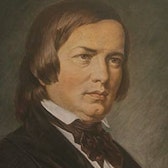
Four of the works on this album were composed in 1849, a time when Germany was in turmoil due to a revolution against monarchies.
Performer Biography
Steven Isserlis, the cellist, was awarded a CBE in 1998 for his services to music and received the Schumann Prize of the City of Zwickau (Schumann's birthplace) in 2000.
Composer Biography
Robert Schumann, the composer, played the cello in his youth and considered taking it up again after a hand accident ended his dream of being a virtuoso pianist.
Composer's Artistic Vision
Schumann was the first composer to use the title "Fantasiestücke," adopting it from his favorite author, E.T.A. Hoffmann.
Instruments
Steven Isserlis, the cellist on this recording, had access to two Stradivari cellos for the sessions: the 1730 'De Munck' (or 'Feuermann') and the 1726 'Marquis de Corberon' (or 'Nelsova').
Composition History
The Third Violin Sonata by Schumann had a "chequered history," originally conceived as a collaborative work with Johannes Brahms and Albert Dietrich, based on the motto 'F-A-E' ('frei aber einsam').
Composition History
Schumann's widow, Clara, destroyed his five Romances of 1853 and likely the fair copy of the first movement and Scherzo of the Third Violin Sonata, associating the music with his madness.
You might also enjoy...
R. Schumann: Complete Works for Cello & Piano
Schumann: Works for Cello and Piano
Schumann: Cello Concerto and Works for Cello & Piano