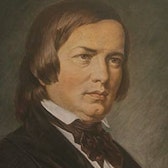
Up to age thirty, Robert Schumann, the composer, focused almost exclusively on piano works, composing nearly all his famous solo pieces between 1830 and 1839.
Composition History
In 1840, the year he married Clara Wieck, Robert Schumann branched into song, writing around 250 Lieder, placing him second only to Schubert in song composition.
Composition History
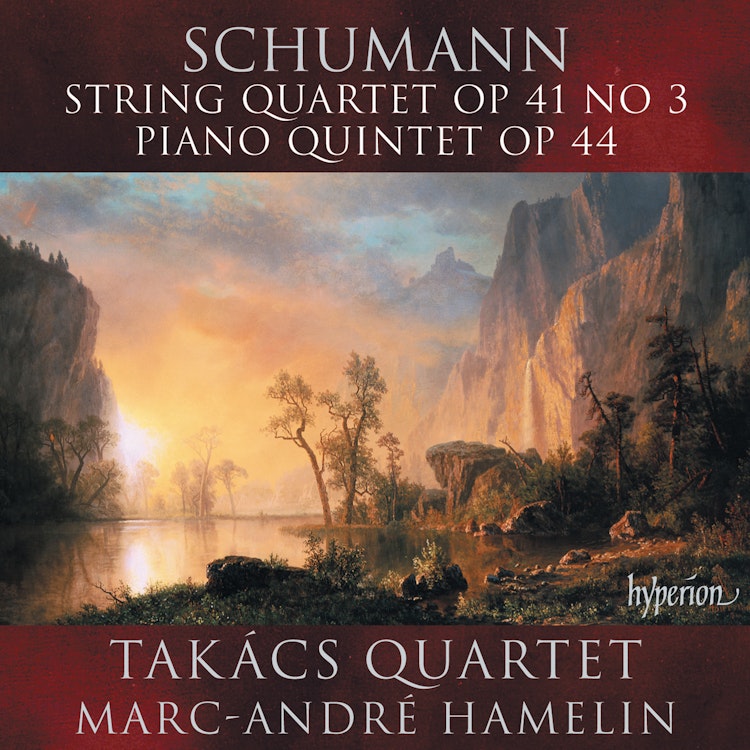
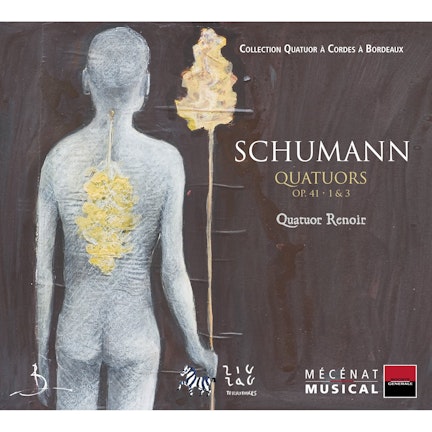
Robert Schumann intensively studied the string quartets of Haydn and Mozart in April 1842 before composing his own three string quartets, published as Op. 41.
Composer's Artistic Vision
Robert Schumann's compositional technique included 'flash-forwards' or 'long-range anticipations,' where musical passages in one movement foreshadow themes in later movements, a technique that influenced Mahler.
Composition History
Robert Schumann only turned his attention to chamber music in 1842, after gaining experience composing for orchestra, including his first two symphonies.
Compositional Technique
In his Piano Quintet, Robert Schumann combines the main themes of the first and last movements in a double fugue at the climax of the finale, a rare compositional feat.
Performer Biography
The Takács Quartet, formed in 1975 at the Franz Liszt Academy in Budapest, has won numerous international awards, including the Gold Medal at the 1978 Portsmouth and Bordeaux Competitions.
You might also enjoy...
Schumann, R.: String Quartet No. 1 / Piano Quintet in E-Flat Major