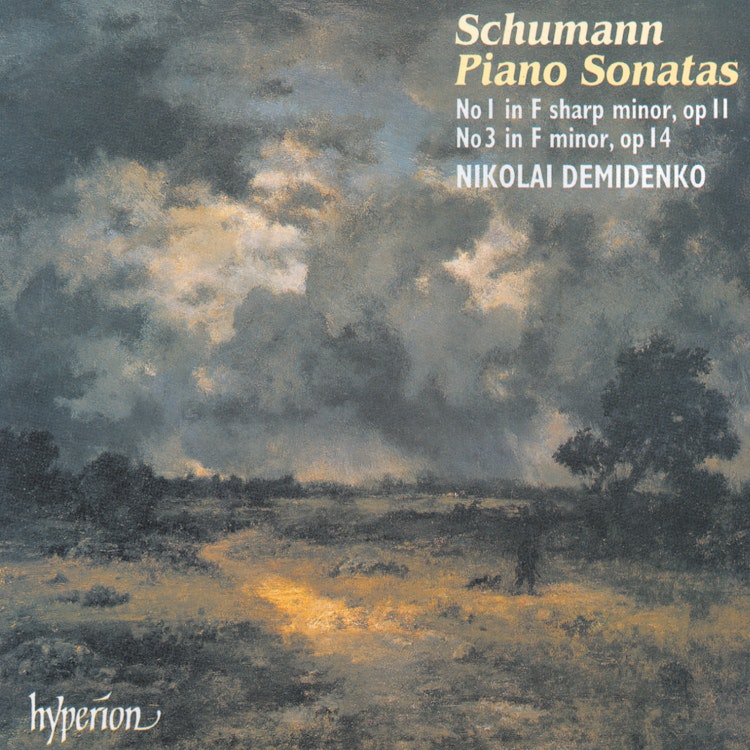
Schumann's Piano Sonata No. 3 in F minor, Op. 14, was originally published under the "wholly inappropriate" and "catchpenny" title 'Concert sans orchestre' at the publisher's insistence.
Historical Context
Schumann's relationship with Clara Wieck faced "implacable opposition" from her father, who instructed Clara to return all of Schumann's letters.
Composition History
Schumann's Piano Sonata No. 3 in F minor, Op. 14, was composed during his "darkest period" in 1836, a time when he was completely separated from Clara Wieck.
Composition History
The title page of the original edition of Schumann's Piano Sonata No. 1 in F sharp minor, Op. 11, conspicuously omitted Schumann's name, instead dedicating it "To Clara from Florestan and Eusebius."
Compositional Technique
The slow movement of Schumann's Piano Sonata No. 3 in F minor, Op. 14, consists of variations on an "Andantino de Clara Wieck," and a five-note descending scale from her theme permeates other sections of the work.
Composer Biography
Robert Schumann's Piano Sonata No. 1 in F sharp minor, Op. 11, was described by him as "one long cry from the heart to you" to Clara Wieck, his future wife.
Critical Reception
Despite the championship of Johannes Brahms, who gave its first public performance in 1862, Schumann's Piano Sonata No. 3 in F minor, Op. 14, has remained among his least-known piano works.