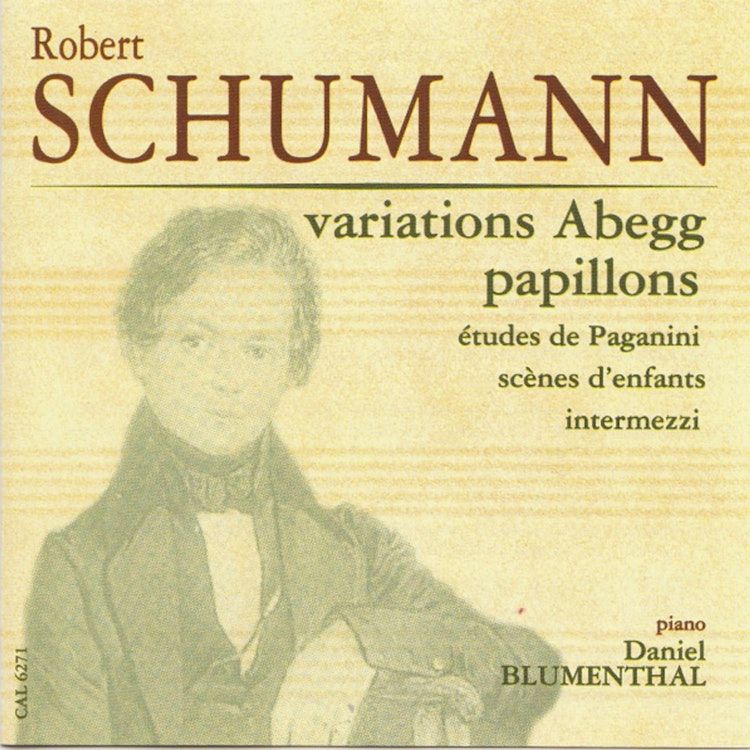
Schumann's Theme and Variations on the name Abegg uses the letters of German musical notation to define its principal theme.
Composer Biography
Schumann considered his Intermezzi, Opus 4, to be "one of his most perfect creations," marking a synthesis of his style with contrapuntal writing and a personal rhythmic vocabulary.
Composer's Artistic Vision
Schumann's Six Etudes, Opus 3, while technical, primarily aim to develop a diversity of expressive means, with Schumann stating, "There is no other musical genre where poetic license is as beautiful as in these Caprices."
Composition History
Schumann's Papillons, Opus 2, began as a series of separately conceived dances in 1829, which he later selected, completed, and reorganized into the collection.
Composer's Artistic Vision
Schumann's Kinderszenen, Opus 15, are not for children but are "backward glances by an adult for adults," born from the absence of his beloved Clara Wieck, his future wife.
Composition History
The dedicatee of Schumann's Abegg Variations, Countess Pauline von Abegg, was actually Meta Abegg, a young pianist and daughter of a merchant whom Schumann met in Mannheim.
You might also enjoy...
Schumann: Theme and Variations on the name Abegg - Papillons - 6 Etudes pour le pianoforte d'apres les caprices de Paganini