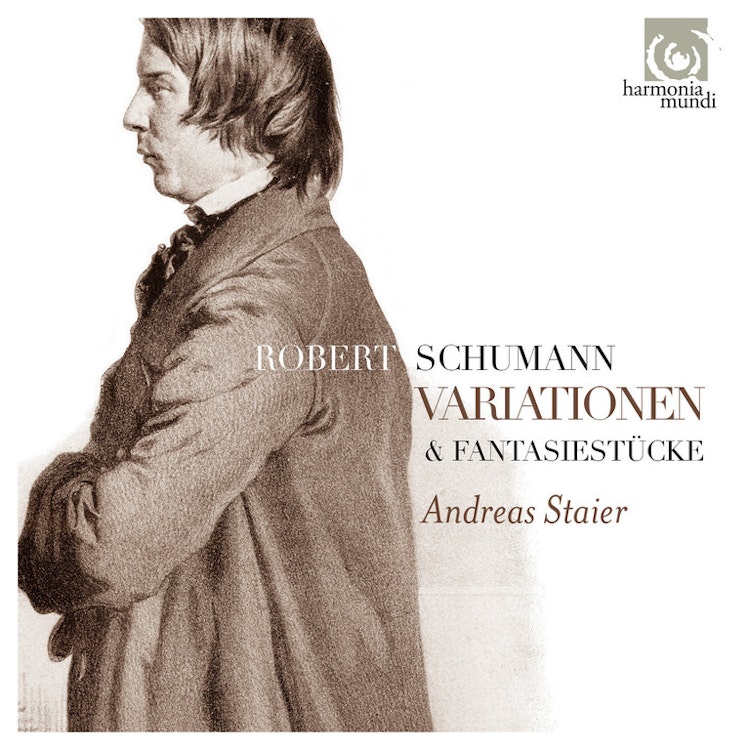
Schumann's Fantasiestücke op.12 employ 'Romantic irony' through shifts and displacements that seem to overrule the time signature, creating subtle irregularities.
Composer Biography
Schumann never fully decided between a career in music or literature, and is considered by some to be the most literary of great musicians.
Composer's Artistic Vision
Robert Schumann, a musician driven by a "frenzy," aimed to usher in a new poetic era, a goal he articulated in the Neue Zeitschrift für Musik.
Composition History
Schumann worked on the Variations in E flat major ('Ghost Variations') in the days leading up to his suicide attempt, and possibly after it, as suggested by changes in his handwriting.
Composition History
The Abegg Variations, Opus 1, were originally conceived as an orchestral work and performed as such in 1829/30, but nothing of that version has survived.
Composition History
Schumann claimed to have found the titles for his Fantasiestücke op.12 only after composing the pieces, which might explain why not all titles perfectly fit the music.
Composition History
Schumann's Opus 1, the Abegg Variations, is dedicated to a Fräulein Meta Abegg, whose surname provided the musical motif for the variations.
You might also enjoy...
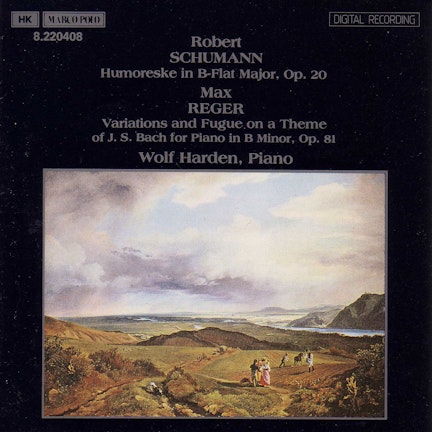
Schumann, R.: Humoreske, Op. 20 / Reger: Variations and Fugue On A Theme of J.S. Bach
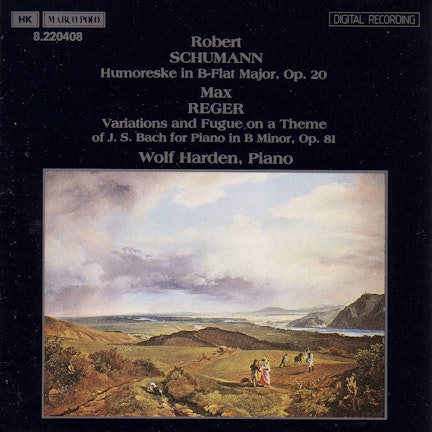
Schumann, R.: Humoreske, Op. 20 / Reger: Variations and Fugue, Op. 81
Schumann, R.: Humoreske, Op. 20 / Reger: Variations and Fugue, Op. 81