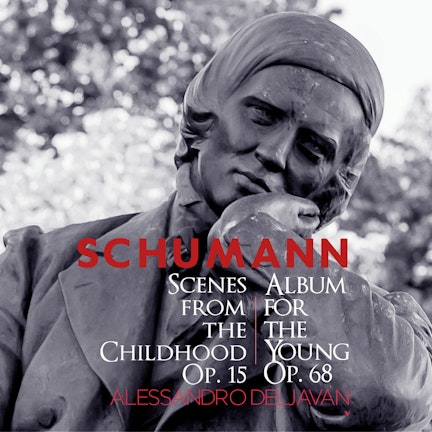
Dasol Kim, the pianist on this album, considers Robert Schumann one of his "dear friends" among distant composers, feeling a deep connection to his music.
Composer's Artistic Vision
For pianist Dasol Kim, Schumann's music is a reflection of something deeply human—impulsive, tender, restless, and raw—that speaks directly to the heart without disguising itself behind form or logic.
Historical Context
The Geistervariationen (Ghost Variations) were inspired by a theme that Robert Schumann believed was sung to him by the ghosts of Schubert and Mendelssohn.
Recording & Production
This album was co-produced with BR-KLASSIK and recorded from April 7 to 10, 2025, at Studio 2 of the Bayerischer Rundfunk in Munich, Germany.
Compositional Technique
The Carnaval, Op. 9, uses a musical cipher based on the German note names A-S-C-H, which encodes multiple meanings related to Schumann's fiancée, Ash Wednesday, and his own monogram.
Composition History
Schumann's final completed composition for piano is the Geistervariationen (Ghost Variations), written in February 1854, shortly before his suicide attempt.
Compositional Technique
In Carnaval, Schumann included an un-rhythmicised insert titled 'Sphinxes' with the ASCH cipher variants, which are meant for the eye only and not to be sounded.