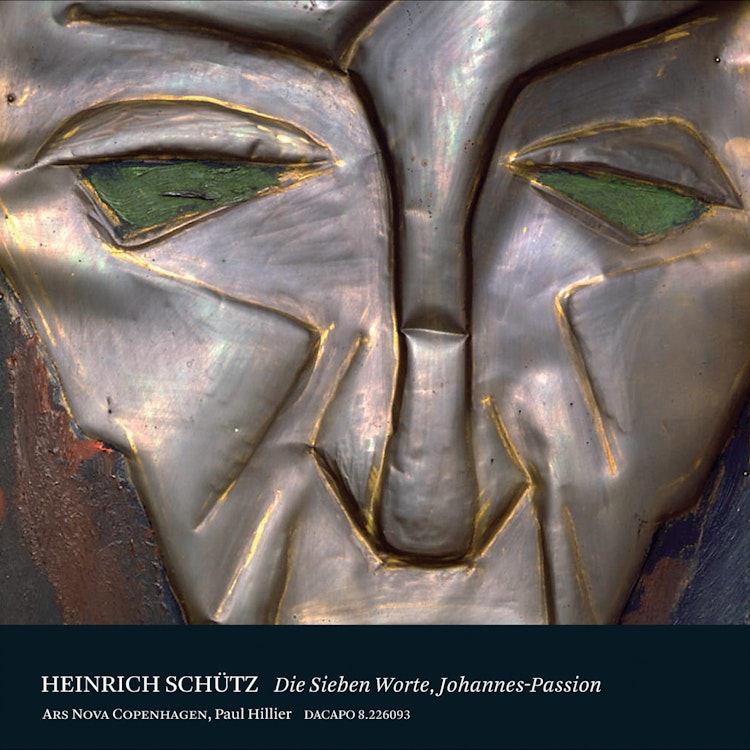
Schutz: Die Sieben Worte Jesu Christi am Kreuz - Johannes-Passion
4/27/2010, 19 Tracks, 58:09
Featuring
Paul Hillier
Else Torp
Linnea Lomholt
Adam Riis
Johan Linderoth
Jakob Bloch Jespersen
Eric Lindblom
Erik Bjorkqvist
Ian Price
Juliane Laake
Sarah Perl
Leif Meyer
Ars Nova Copenhagen
Heinrich Schütz
Did you know?
1/7
Composer's Artistic Vision
Instead of moving a listener's emotions directly, Schütz sharpens the narration in his Passion settings by carefully controlling the listener's progress through the text, guiding attention to specific moments.
Composition History
The exact date of composition for 'Die Sieben Worte' is unknown, but an inventory suggests it was composed before 1657/58.
Compositional Technique
Schütz intensifies Jesus's words in 'Die Sieben Worte' by adding two high-range instruments that play along with the singer, creating a richer harmonic texture.
Compositional Technique
In 'Die Sieben Worte', Schütz distinguishes between narrative and direct speech by assigning Jesus's words to a single tenor voice and the Evangelist's narration to various other voices or a four-voice ensemble.
Compositional Technique
In his St. John Passion, Schütz uses a formulaic recitation style for solo singing, without basso continuo or text repetition, contrasting with the expressive Italian monody he was known for.
Composition History
Heinrich Schütz's 'Die Sieben Worte' is known only from a set of performing parts, and its connection to the composer is uncertain.
Composer's Artistic Vision
The hymn framing 'Die Sieben Worte' encourages listeners to reflect on Jesus's last words, aligning with Schütz's goal for contemplation rather than just drama.
You might also enjoy...
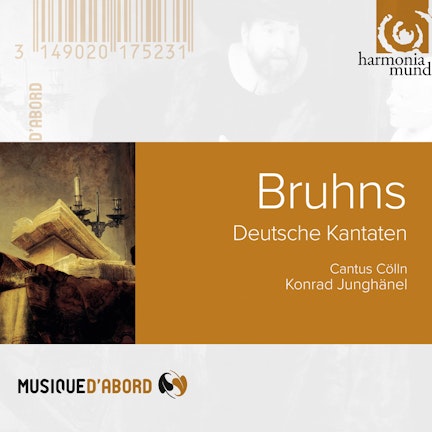
Bruhns: Deutsche Kantaten
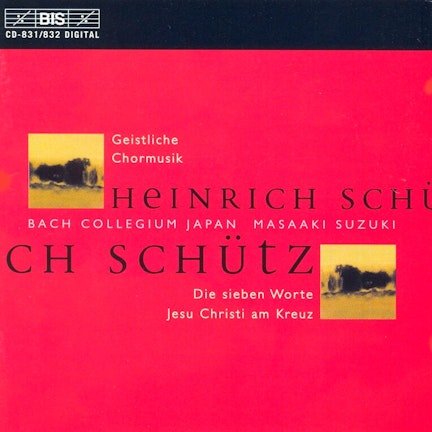
Schutz: Geistliche Chormusik, Op. 11
Pfleger: The Life and Passion of the Christ
Buxtehude: Vocal Music, Vol. 2
Buxtehude: Vocal Music, Vol. 2
Schütz: Matthäus-Passion
Georg Philipp Telemann: Lukaspassion 1744
Buxtehude: Membra Jesu nostri, BuxWV 75
Bach: Matthäus-Passion
Beloved & Beautiful - The Netherlands Bach Society Performs Böhm, J.C. Bach, Schütz, & J.S. Bach