In his work Es steh Gott auf SWV 356, Schütz directly quotes and expands upon two pieces by Monteverdi, Armato il cor and Zefiro torna, demonstrating a technique he called 'aemulatio' or competitive imitation.
Critical Reception
Schütz was acclaimed as the 'parens nostrae musicae modernae' (father of our modern music) in the 17th century, with 'modern' referring to the Italian style he introduced to Germany.
Composition History
The Symphoniae Sacrae II were published in 1647 and include revisions of earlier compositions, some dating back to the 1630s, reflecting Schütz's long-standing project of cultural transfer from Italy to Germany.
Composer's Artistic Vision
Schütz's Symphoniae Sacrae II represent a culmination of his efforts to merge the techniques of the Italian avant-garde with Central German traditions, a project he pursued after returning from Italy in 1629.
Historical Context
Heinrich Schütz composed his Symphoniae Sacrae II during a period of significant upheaval in 1647, marked by the ongoing 29-year war in Central Europe and other conflicts.
Recording & Production
This album is part of a complete recording of Heinrich Schütz's works, a project initiated in 2006 and led by artistic director Hans-Christoph Rademann.
Composer's Artistic Vision
At the very center of the 27 pieces in Symphoniae Sacrae II, Schütz placed the simple yet powerful wish for peace: 'Verleih uns Frieden' (Grant us peace), reflecting the turbulent times.
You might also enjoy...
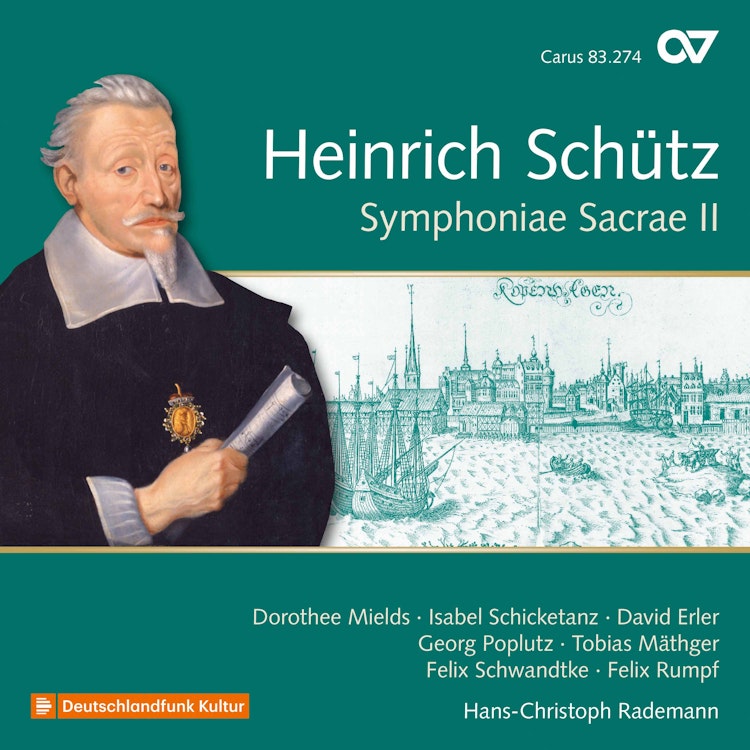
Heinrich Schütz: Symphoniae Sacrae II
Heinrich Schütz: Symphoniae sacrae, Op. 6, SWV 257-276 (Hans Grüß)
Georg Philipp Telemann: Auf Christenheit! - Frankfurter Festmusiken 1716