This recording was made at the Imperial Theatre of Compiègne, a venue known for its exceptional acoustics, which conductor Carlo Maria Giulini considered superior to Vienna's Musikverein.
Composer's Artistic Vision
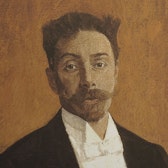
Scriabin, an eccentric character, considered himself music's Messiah and planned to build a temple in India for a 'Mystery' performance that would be humanity's spiritual culmination.
Compositional Technique
Scriabin's sonatas evolved from a four-movement cycle to a single-movement 'poem' with internal episodes and multiple ideas.
Composition History
Scriabin was the first composer to regularly return to the piano sonata form after it had fallen out of favor following Liszt's and Brahms's works in the 1850s.
Composer's Artistic Vision
Scriabin was fascinated by philosophy, esoteric doctrines like theosophy, and synesthesia, leading him to explore links between sounds and colors, and to develop a color wheel for musical keys.
Performer Biography
Varduhi Yeritsyan, the pianist on this album, has a unique background, being a specialist in both Russian and French repertoire due to her training with masters like Brigitte Engerer and Vladimir Krainev.
Composer Biography
Alexander Scriabin, a fellow student of Rachmaninov at the Moscow Conservatory, rejected vocal and folkloristic music, writing exclusively for piano and orchestra.