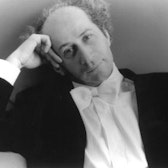
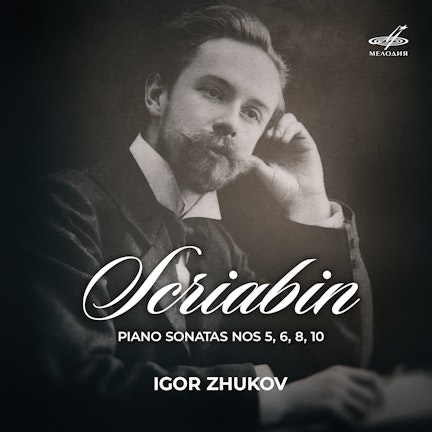
Anatol Ugorski, the pianist on this recording, was discovered by Deutsche Grammophon while recording Beethoven's Diabelli Variations and signed an exclusive contract.
Composition History
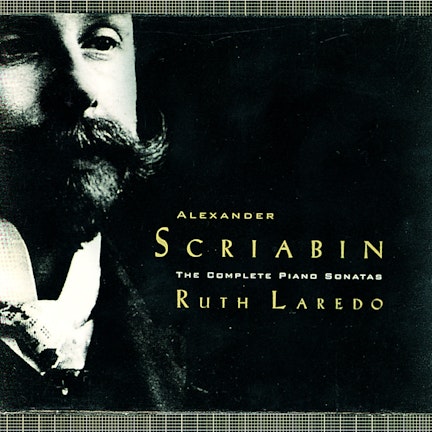
Scriabin's cycle of ten piano sonatas spans almost his entire productive period, covering twenty years of world history from 1892 to 1913.
Composer's Artistic Vision
Scriabin conceived a multimedia 'mystery' involving sounds, colors, language, fragrances, touch, and dance, to be performed in an Indian temple to stimulate all senses.
Composer's Artistic Vision
Scriabin developed an interest in theosophy and the ideals of Nietzsche, believing that all arts and the universe needed to be united in a mystical way.
Composer Biography
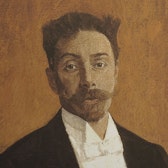
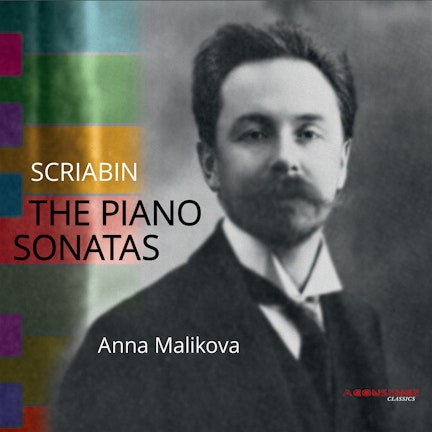
Alexander Scriabin, the composer of these sonatas, graduated from the Moscow Conservatoire with a gold medal, an achievement shared only with Rachmaninov in his year.
Compositional Technique
Many of Scriabin's compositions are based on a specific 'mystical chord' consisting of the notes C-F#-Bb-E-A-D-G.
Performer Biography
Anatol Ugorski, a native of Siberia, was accused of 'seditious concert activities' and restricted to playing only in the outskirts of the province before emigrating to Germany in 1990.