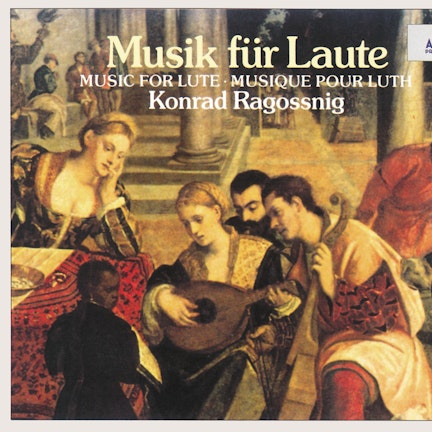
Serenissima 1 (La) - Lute Music In Venice 1500-1550
4/1/1990, 9 Tracks, 1:04:51
Featuring
Jakob Lindberg
Joan Ambrosio Dalza
Francesco Spinacino
Giovanni Maria da Crema
Vincenzo Capirola
Francesco da Milano
Did you know?
1/7
Cultural Impact
Francesco da Milano, the most admired lutenist in 16th-century Italy, was called "il divino" by his contemporaries, and his playing could transport listeners into a "pleasurable melancholy."
Composer Biography
Giovanni Maria da Crema, a prolific lute composer, was a converted Jew who worked for illustrious patrons like the Gonzaga family, Pope Leo X, and the Doge in Venice.
Instruments
By 1500, the lute was a sophisticated instrument with six courses (pairs of strings) and was played with right-hand fingers, allowing for complex contrapuntal music.
Composition History
The first printed lute tablature, Francesco Spinacino's Intabalatura de Lauto, was published in Venice in 1507 by Ottaviano Petrucci, marking the first published collection entirely dedicated to instrumental music.
Historical Context
Despite being a battlefield for European rulers between 1494 and 1559, Venice was never occupied or plundered, becoming a haven for intellectuals.
Cultural Impact
Venice became a central hub for Renaissance culture, establishing important traditions in art, music, and theatre, and was the most active center for music printing in Italy.
Historical Context
Venice, known as "La Serenissima," was the most powerful secular state in Italy at the beginning of the 16th century.