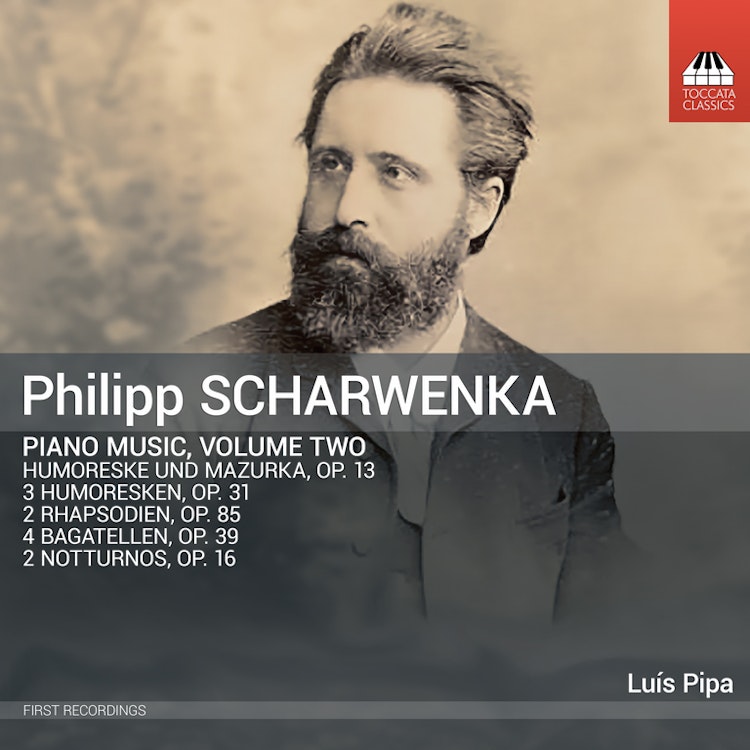
Despite his compositional skill, Philipp Scharwenka's creative reputation was overshadowed by his brother Xaver, who was a more virtuosic and lavish performer-composer.
Composer's Artistic Vision
Philipp Scharwenka's works maintain a balance between classical and modern forms and expression, as he carefully examined innovations before adopting them.
Compositional Technique
Philipp Scharwenka's piano style is characterized by the supremacy of idealized dance-rhythms, often inspired by waltzes, Ländler, and mazurkas, reflecting his Polish descent.
Composer Biography
Philipp Scharwenka's mother, Apollonia Emilia, was responsible for his musical talent, bringing a piano into the house and engaging a teacher.
Composition History
Philipp Scharwenka and his brother Xaver founded the Scharwenka Conservatoire in Berlin in 1881, which later merged to become one of Germany's leading institutions.
Cultural Impact
The Klindworth-Scharwenka Conservatoire, co-directed by Philipp Scharwenka, attracted many women seeking higher education in music, especially for piano and composition.
Composer Biography
Philipp Scharwenka and his brother Xaver both studied at Theodor Kullak's Akademie der Tonkunst in Berlin, where Philipp's primary teacher was Mendelssohn pupil Richard Wüerst.
You might also enjoy...
Nazareth: Tangos, Waltzes and Polkas
Castelnuovo-Tedesco: Piano Music
Gottschalk: 40 Works for Piano
Lux aeterna: Visions of Bach
Gershwin: Songs
Borealis - Piano Works by Laura Ballestrino
Emil Gilels 100: Essential
Maria Yudina. Collection
Origines
ALT-WIEN - Piano Works
Doce Danzas Espanolas/Danza Lenta/Allegro De Conceierto