The 1979 Iranian Revolution caused a sharp decline in classical music education and production, shifting emphasis to traditional Iranian music and instruments.
Historical Context
In 1860, the Dar ul-Funun School, Iran's first modern university, established a music division where the piano became a required second instrument for military music education.
Performer Biography
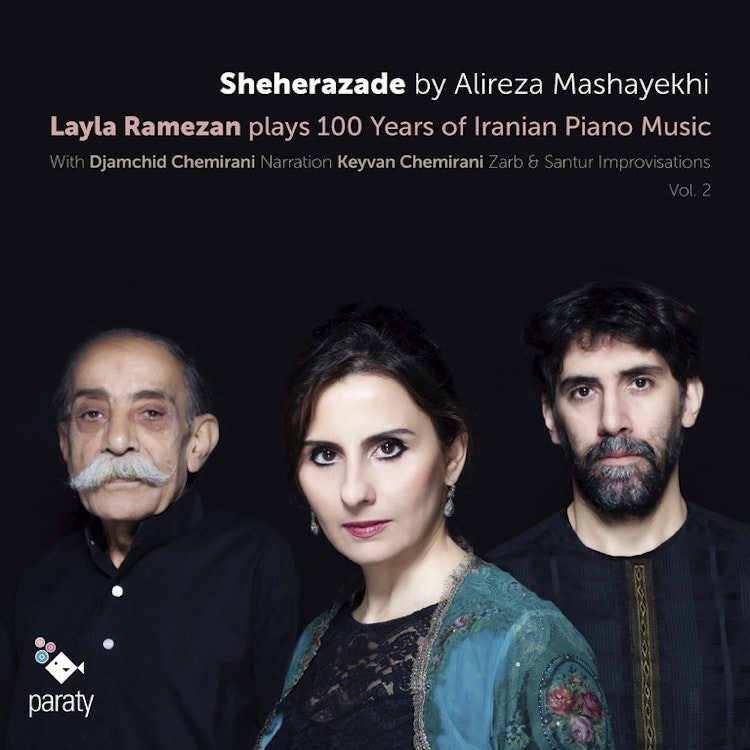
Layla Ramezan, the Iranian pianist on this album, actively creates links between her Persian heritage and contemporary music, performing internationally and collaborating with diverse musicians and composers.
Composer's Artistic Vision
For Iranian composers, the piano is a privileged instrument for experimenting and pushing creative limits, allowing them to break free from historical and cultural contexts.
Historical Context
The piano first appeared in Iran at the court of King Fath'Ali Shah (Qajar dynasty, 1797-1834) as a gift from Napoleon III.
Composer Biography
Alireza Mashayekhi, born in Tehran in 1940, is considered a pioneer of modern music in Iran, having studied composition in Vienna and Utrecht and taught at the University of Tehran since 1970.
Compositional Technique
With the piano, Iranian composers discovered new concepts like polyphony, range, and dynamics, leading to a more elaborate architectural, formal, and programmatic vision of musical composition.