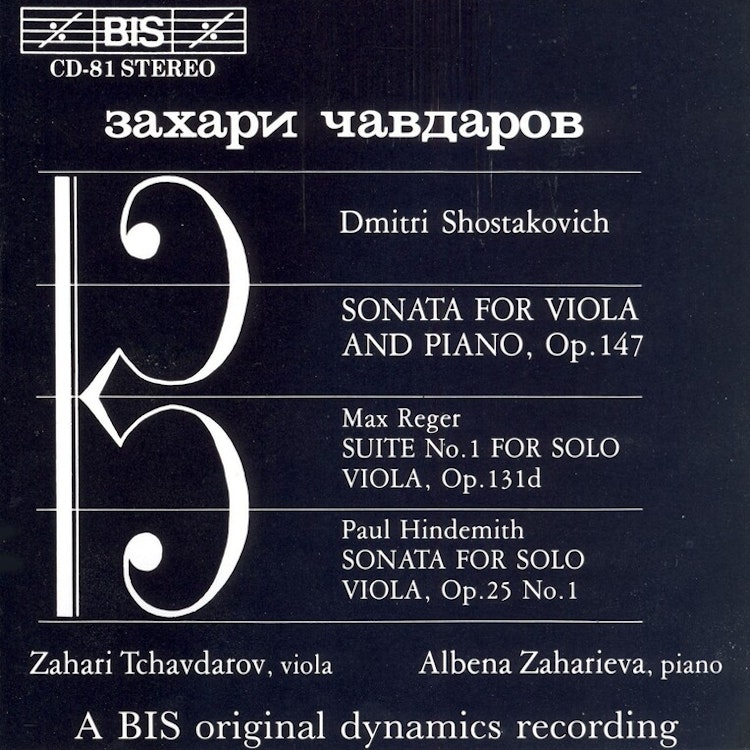
Shostakovich / Hindemith: Viola Sonatas / Reger: Suite No. 1 for Solo Viola
1/31/1994, 12 Tracks, 57:13
Featuring
Zahari Tchavdarov
Albena Zaharieva
Dmitri Shostakovich
Max Reger
Paul Hindemith
Did you know?
1/7
Composer Biography
Max Reger, despite dying at only 43, had a huge oeuvre, with 150 opus numbers, some of which comprised multiple sonatas.
Compositional Technique
In the finale of his Viola Sonata, Shostakovich, a deeply traditional composer, frequently quoted earlier masters, including fragments from Mahler, Beethoven, Berg, Tchaikovsky, Rachmaninov, and Wagner.
Compositional Technique
The fourth movement of Hindemith's Sonata for Solo Viola, Op. 25 No. 1, is famous for its tempo marking: "Rasendes Zeitmaß. Wild. Tonschönheit ist Nebensache" (Savage tempo. Wild. Tonal beauty is a secondary matter).
Critical Reception
An article in the 1975 Soviet journal Soujetskaja Muzyka, published after Shostakovich's death, described his Viola Sonata as a work that "will make the world a better place."
Composition History
Dmitri Shostakovich's Viola Sonata, Op. 147, was his last complete work and was dedicated to Fyodor Drushinin, a violist.
Composition History
Paul Hindemith's Sonata for Solo Viola, Op. 25 No. 1, composed in 1922, was written as a replacement for an earlier, more traditional viola sonata he considered outdated.
Composer's Artistic Vision
Max Reger humorously referred to composing for solo instruments as a "musical chastity-belt," meaning he had to manage without the substantial volumes of sound he was accustomed to.
You might also enjoy...
Hindemith: Sonatas For Viola Alone / Piano And Viola Alone
Songs of Solitude
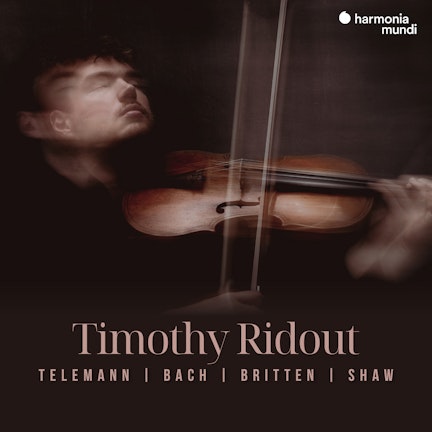
Telemann - Bach - Britten - Shaw
Women’s Works: Works for Solo Viola by American Women