Shostakovich: String Quartet No. 3 & Piano Quintet
4/13/2018, 10 Tracks, 1:09:14
Featuring
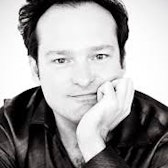
Piotr Anderszewski
Corina Belcea-Fisher
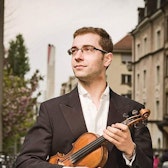
Axel Schacher
Krzysztof Chorzelski
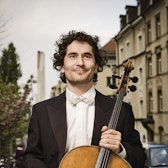
Antoine Lederlin
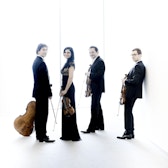
Belcea Quartet
Dmitri Shostakovich
Did you know?
1/7
Composition History
Dmitri Shostakovich's Piano Quintet in G minor, composed in 1940, was awarded the Stalin Prize, reflecting the composer's erratic relationship with the Soviet regime.
Performer Biography
Neither the Belcea Quartet nor pianist Piotr Anderszewski had previously recorded music by Dmitri Shostakovich, but these two works have long been part of their joint concert repertoire.
Historical Context
Dmitri Shostakovich began composing string quartets after Soviet dictator Stalin furiously denounced his opera 'Lady Macbeth of the Mtsensk District' in 1936, leading to a period of intense fear for the composer.
Composer's Artistic Vision
During a traumatic period, Dmitri Shostakovich used the private genre of the string quartet to write music for his 'quiet satisfaction' while publicly claiming to work on bombastic, politically acceptable pieces.
Composer Biography
Dmitri Shostakovich, the composer, only began writing string quartets at age 32, having previously considered it the 'most difficult of all musical genres'.
Interpretation
Violist Krzysztof Chorzelski of the Belcea Quartet states that Shostakovich's quartets, though abstract, carry 'very concrete meanings and messages' requiring unique intensity from performers.
Composer Biography
Dmitri Shostakovich admitted that he added a piano part to his Piano Quintet so he could perform it himself and travel to different cities and villages for concerts.