Shostakovich's Symphony No. 5 was a turning point for the composer, written after his Symphony No. 4 was proscribed by Stalin in 1936.
Historical Context
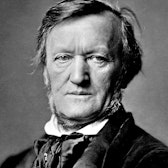
The Riga Opera, where Arvīds Jansons worked, had a rich history, with Richard Wagner (composer of the encore on this album) and Bruno Walter among its former conductors.
Instruments
This album showcases the distinctive sound-world of the Leningrad Philharmonic in 1971, including the use of vibrato by the horn section and a strident attack from the trumpets, representing a performing tradition that is now largely gone.
Performer Biography
Arvīds Jansons, the conductor on this album, began his musical life as a violinist and studied at the Riga Conservatorium.
Critical Reception
Despite the presence of celebrated conductor Gennady Rozhdestvensky on the same tour, musicians considered Arvīds Jansons's readings to be more interesting and better prepared due to Rozhdestvensky's disinterest in rehearsing.
Recording & Production
The two Shostakovich performances on this recording were taken over by Arvīds Jansons at short notice, as they were originally to be conducted by Yevgeny Mravinsky.
Performer Biography
Arvīds Jansons became one of the Soviet Union's leading conducting pedagogues, instrumental in producing at least two generations of Russian-trained podium artists.