The Tenth Symphony symbolically marked the beginning of the 'Thaw' in Soviet music, a period of relative liberalization following Stalin's death in March 1953.
Composer's Artistic Vision
The second movement, an 'infernal Scherzo,' is interpreted by Solomon Volkov (who published Shostakovich's memoirs) as a portrayal of Stalin in sound.
Compositional Technique
The symphony features the frequent use of the DSCH motif, Shostakovich's monogram in German spelling, which becomes a 'personal narrative' and a 'self-portrait' for the composer.
Composition History
Shostakovich began his Tenth Symphony eight years after his Ninth, as he was accused of formalism in 1948 and many of his works were banned.
Critical Reception
The symphony sparked a three-day discussion in Moscow in 1954, where anti-formalists criticized Shostakovich for 'mental oppression' and 'ideological depravity,' but were defeated.
Compositional Technique
The third movement includes a mysterious horn call, later identified as the E-A-E-D-A motif, which is the monogram of Shostakovich's student Elmira Nazirova.
Recording & Production
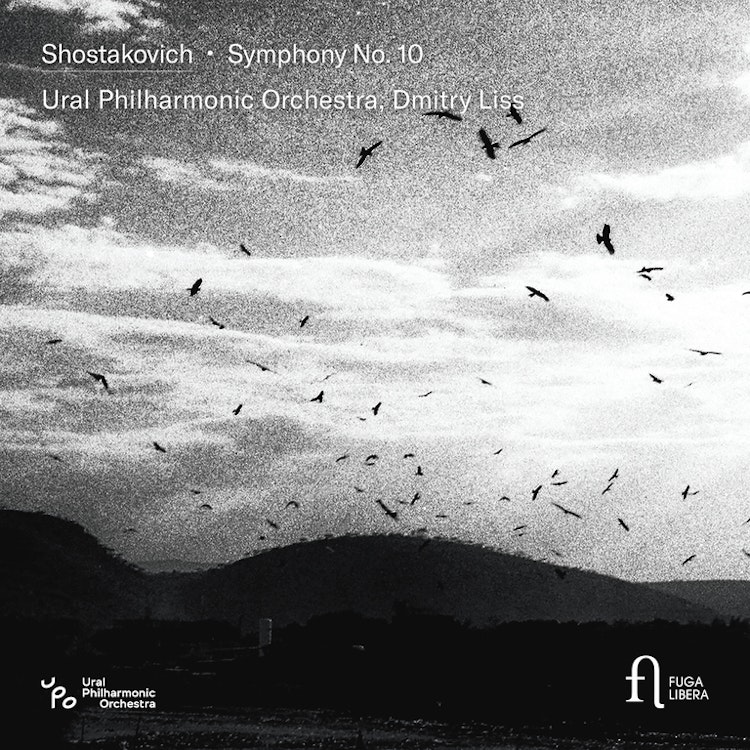
This album is a live recording from November 22, 2021, made in the Grand Hall of Sverdlovsk Philharmonic, Yekaterinburg, Russia.
You might also enjoy...
Shostakovich: Symphony No. 11 in G Minor, Op. 103 "The Year 1905"
Shostakovich: Symphonies Nos. 5 & 1
Shostakovich: Symphony No. 5 in D Minor, Op. 47 (Live)