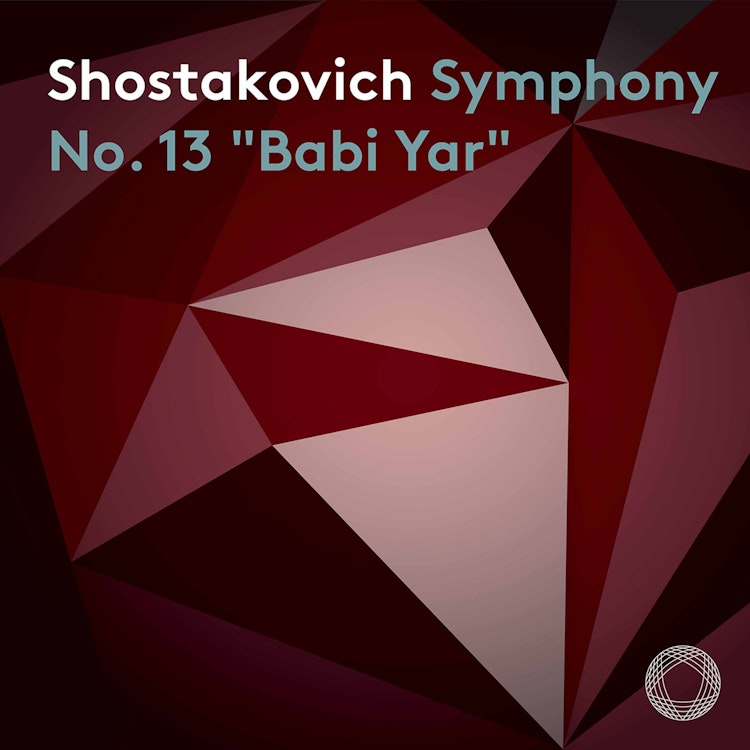
Shostakovich’s Symphony No. 13 takes its title from the Yevgeny Yevtushenko poem “Babi Yar”, concerning a Nazi massacre of Jews in 1941. The composer additionally sets another four poems by Yevtushenko, all of which combine to offer a fascinating insight into the realities of Soviet life. Conducted by Kirill Karabits, the Russian National Orchestra is joined by bass Oleg Tsibulko, the Popov Academy of Choral Arts Choir, and the Kozhevnikov Choir.
Featuring
Oleg Tsibulko
Kirill Karabits
Kozhevnikov Choir
Chorus of the Moscow Academy of Choral Art
Russian National Orchestra
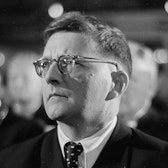
Dmitri Shostakovich
Did you know?
1/7
Composition History
Yevgeny Yevtushenko, the poet whose texts are set in this symphony, was forced by Khrushchev's administration to change the powerful closing lines of his poem 'Babiy Yar' after the symphony's premiere.
Notable Performances
Despite pressure and attempts to intimidate the conductor Kirill Kondrashin, the premiere of Shostakovich's Symphony No. 13 went ahead, and both the composer and poet received a standing ovation.
Recording & Production
This recording of Shostakovich's Symphony No. 13 is part of a larger Shostakovich cycle by the Russian National Orchestra and Pentatone.
Composition History
Shostakovich initially intended the first movement, 'Babi Yar,' to be a standalone choral work, but decided to set more of Yevtushenko's poems to create his Thirteenth Symphony.
Historical Context
The poem 'Babiy Yar' by Yevgeny Yevtushenko, which forms the basis of the first movement, ignited controversy in the Soviet Union due to its exposure of Soviet antisemitism.
Composer's Artistic Vision
Shostakovich, who detested antisemitism, saw Yevgeny Yevtushenko's poem 'Babiy Yar' as a call to arms for a new ethics in the supposedly de-Stalinized era.
Compositional Technique
In the second movement, 'Humour,' Shostakovich boldly quotes from his earlier song 'MacPherson Before His Execution' to emphasize the assertive character of humor as a survival mechanism.