Shostakovich: Symphony No. 13 - Part: De profundis
5/17/2024, 6 Tracks, 1:09:30
Featuring
John Storgårds
Albert Dohmen
BBC Philharmonic
Estonian National Male Choir
Arvo Pärt
Dmitri Shostakovich
Did you know?
1/7
Compositional Technique
Arvo Pärt's 'tintinnabuli' style, exemplified by 'De profundis', uses triadic arpeggiations and scalic figures to create clashes that are both unpredictable and strictly controlled.
Historical Context
The poem 'Babiy Yar' by Yevgeny Yevtushenko, set in Shostakovich's Symphony No. 13, sparked controversy by implicitly commenting on anti-Semitism in the Soviet Union.
Composition History
Shostakovich's Symphony No. 13, 'Babiy Yar', nearly had its premiere called off due to 'interference from above' by Soviet authorities.
Performer Biography
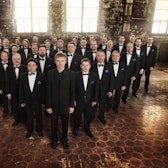
The Estonian National Male Choir, founded in 1944, received a Grammy award in 2004 for Best Choral Performance, a first for Estonia.
Composer's Artistic Vision
Shostakovich used C major as his 'favourite musical symbol for authority' and deliberately avoided conforming to it in the second movement of his Symphony No. 13.
Composer Biography
Arvo Pärt, a composer born in 1935, went through a prolonged creative crisis between 1968 and 1976, after which he emerged with his 'tintinnabuli' style.
Composition History
Shostakovich initially planned 'Babiy Yar' as a single-movement cantata but expanded it into a five-movement symphony after finding more subversive poems by Yevgeny Yevtushenko.
You might also enjoy...
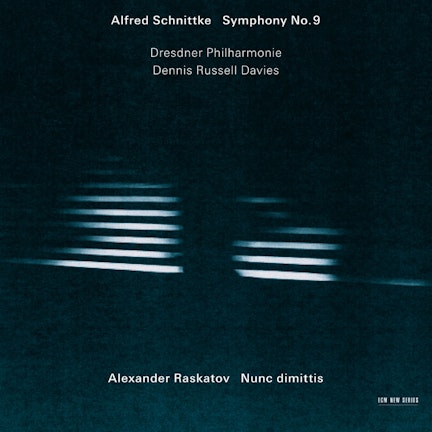
Schnittke: Symphony No. 9 / Raskatov: Nunc Dimittis
M. Kurek: Symphony No. 2 "Tales from the Realm of Faerie" & Other Works
James MacMillan: Symphony No. 5 "Le grand Inconnu" & The Sun Danced
Yuri Termirkanov Conducts Shostakovitch
Mariss Jansons Conducts Shostakovich
Shostakovich: Symphonies 1 & 9; Barber: Adagio for Strings
Shostakovich: Symphonies Nos. 4 & 9 and The Execution of Stepan Razin, Op. 119
Shostakovich: The Complete Symphonies, Piano Concertos & Cello Concertos
Shostakovich: The Symphonies
Shostakovich:Symphonies 1 & 10/Concerto for Piano, Trumpet, Strings/Songs & Dances of Death