The triumphant D major ending of the symphony, with its repeated dominant note A, was interpreted by Shostakovich as a 'cudgel beating down on the Russian people', forcing them to 'rejoice'.
Compositional Technique
The final movement of Shostakovich's Fifth Symphony features a 'motif of terror' that accelerates, creating the illusion of escape before revealing the protagonist is trapped, with a low ostinato A by the timpani symbolizing brainwashing.
Composer Biography
During the 'Great Terror', Shostakovich kept a packed suitcase ready day and night, fearing his own inevitable arrest.
Historical Context
Shostakovich composed his Fifth Symphony in 1937, a period he called the 'worst of times' due to the 'Great Terror' in Soviet Russia, where many citizens were secretly executed or sent to the Gulag.
Composer's Artistic Vision
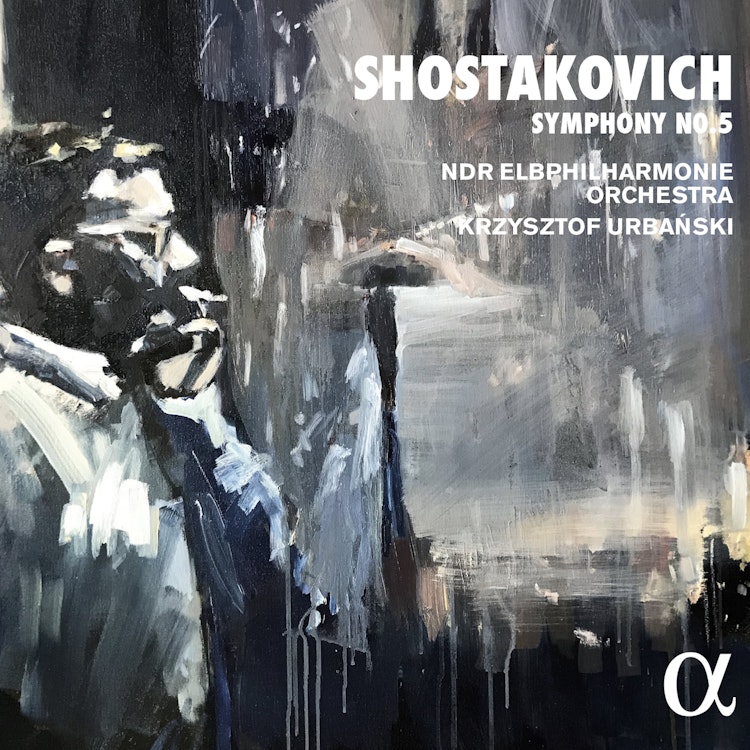
The conductor Krzysztof Urbański believes that despite its outwardly optimistic sound, Shostakovich's Fifth Symphony is actually extremely tragic, with the composer's personal thoughts hidden between the notes.
Composition History
Shostakovich's Fourth Symphony was denounced for its dissonances and bleak atmosphere, leading him to deliberately simplify his musical language for the Fifth Symphony to please authorities.
Performer Biography
Krzysztof Urbański, the conductor on this album, was the first conductor ever to receive the prestigious Leonard Bernstein Award at the Schleswig-Holstein Musik Festival in June 2015.
You might also enjoy...
Shostakovich: Symphony No. 10 in E Minor, Op. 93 (1989 Live Recording)
Shostakovich: The Bedbug, Incidental Music, Op. 19
Shostakovich: Symphonies Nos. 5 & 9
Shostakovich: Symphony No. 5
Shostakovich: Symphony No. 9 in E-Flat Major, Op. 70