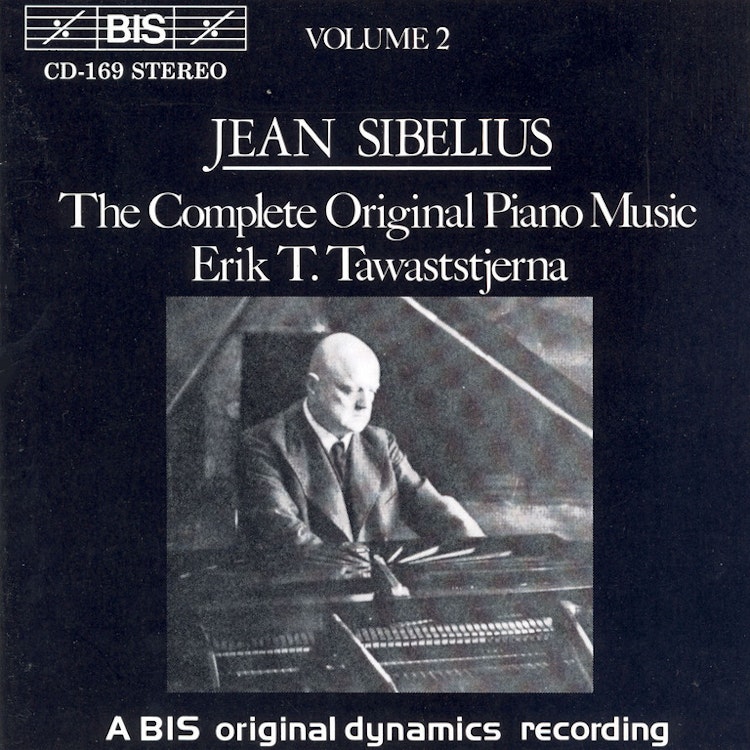
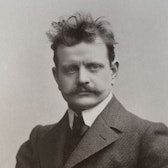
During World War I, Sibelius found himself cut off from his German publishers and composed many small instrumental miniatures and songs, which he sold to Helsinki firms.
Composition History
The low opus number 34 for the Bagatelles is chronologically misleading; Sibelius deleted earlier pieces from his catalogue and filled the gaps with later compositions.
Composer Biography
Jean Sibelius's piano pieces largely coincide with his romantic period, which also includes his Lemminkäinen suite, the first symphony, Finlandia, and the second symphony.
Composer's Artistic Vision
Sibelius described his Bagatelles, Op. 34, as being in the "easy style" that he reserved for Pelle Westerlund, a Helsinki publisher.
Compositional Technique
In the "Caprice" (Op. 24 No. 3), Sibelius imitates various violin-like effects such as saltando, pizzicato, and spiccato by writing in unison for two hands.
Composer Biography
The "Andantino" (Op. 24 No. 7) reminds listeners that Sibelius was both a solo violinist and a chamber musician in his youth before becoming an "orchestral man."
Compositional Technique
The "Nocturne" (Op. 24 No. 8) is considered the most "Finnish" of the Op. 24 pieces, characterized by repeated notes in the main theme and modal progressions.
You might also enjoy...
Godowksy & Stravinsky
GODOWSKY: Piano Music, Vol. 10 - Walzesmasken
Echoes in the Mists
Nelson Freire: Brahms
2025 Cliburn Competition: David Khrikuli - Quarterfinal Round (Live)