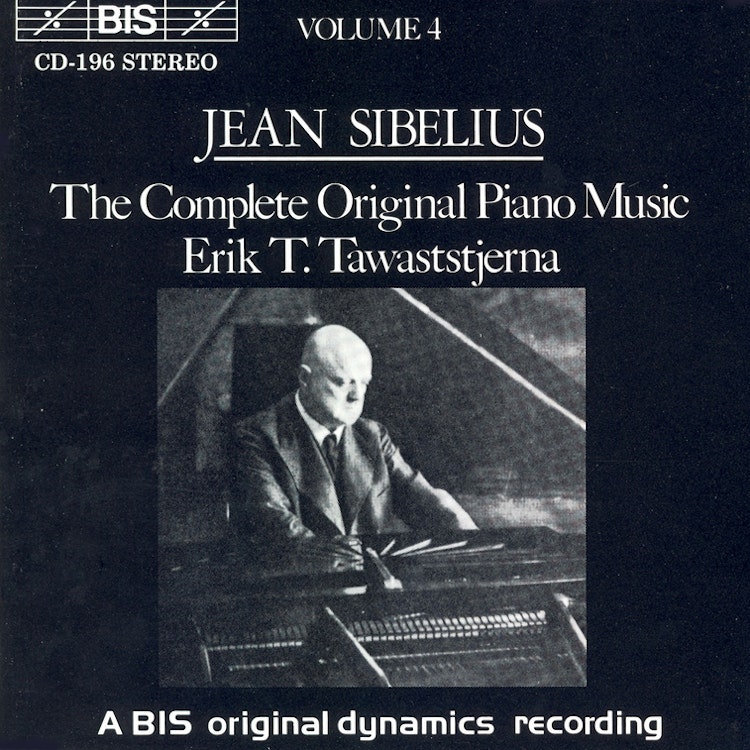
Wilhelm Kempff, a great admirer of Sibelius, once commented on the first sonatina that it was "something to polish one's touch on."
Compositional Technique
The third sonatina in B flat minor is structurally the most interesting of the opus, with all movements built on the same thematic foundation of a series of intervals: third-fourth-fifth.
Composer's Artistic Vision
Sibelius considered thematic unity, or "deep logic," as one of the three main criteria of symphonic form, alongside stringency and style.
Compositional Technique
Sibelius's Three Sonatinas op. 67 revolve around the Fourth Symphony like satellites, with the symphony's tritone tensions providing the gravitational field.
Composition History
During a stay in Berlin in January and February 1914, Sibelius's interest in impressionism was reawakened after the "dark" period of the Fourth Symphony.
Composer's Artistic Vision
Sibelius created a refined, individual piano style in his Sonatinas op. 67 and Two Rondinos op. 68, which, despite appearing ascetic on paper, conceal a rich potential of sounds.
You might also enjoy...
Vladimir Sofronitsky: Concert Recordings (Live)
Alexander Scriabin: PIANO WORKS
American Century
Scriabin: Piano Works (Live)
Jewels For Piano
Tchaikovsky, Rubinstein & Glinka: Russian Seasons
Piano Favourites
Franck: Between Two Worlds
Scriabin: Piano Works
The 46th PTNA Piano Competition 2022: Prize Winners Album (Live)