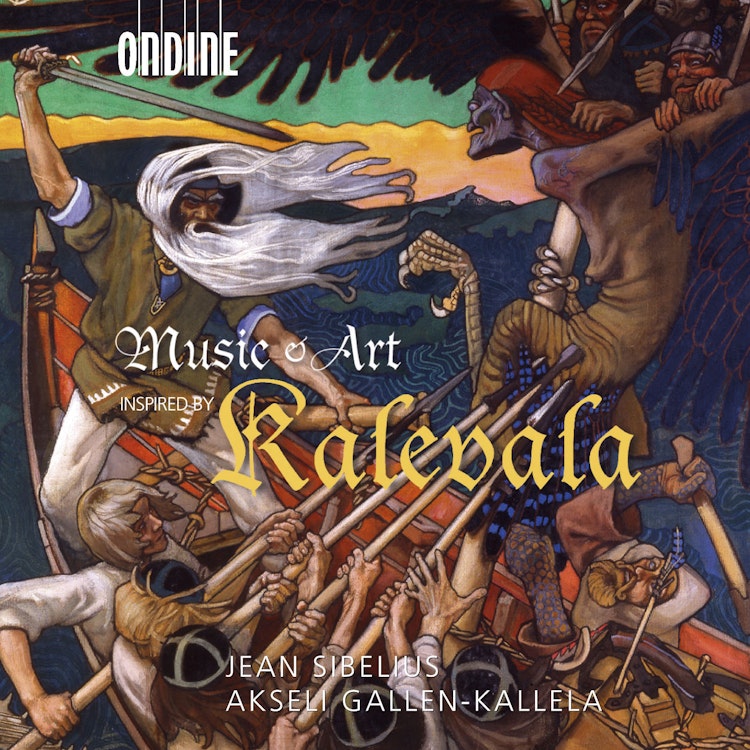
Sibelius, J.: Tapiola / Lemminkainen Suite (Excerpts) / Pohjola's Daughter / Vaino's Song / A Song for Lemminkainen (Helsinki Philharmonic)
7/1/2004, 4 Tracks, 46:16
Featuring
Tuomas Ollila-Hannikainen
Leif Segerstam
Eri Klas
Tampere Filharmonia
Helsinki Philharmonic Orchestra
Finnish National Opera Orchestra
Finnish National Opera Chorus
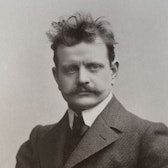
Jean Sibelius
Did you know?
1/7
Composition History
Jean Sibelius's first Kalevala composition, the tone poem Kullervo, was completed in 1892 after he visited Karelia and met runo singer Larin Paraske, who greatly inspired him.
Historical Context
The 1890s, known as the 'Golden Age of Finnish art', saw a nationalist art movement called Kalevala Romanticism and Karelianism, which focused on national Finnish features in response to Russian encroachment on Finland's autonomy.
Cultural Impact
The Kalevala, Finland's national epic, has inspired composers, poets, artists, filmmakers, and graphic novelists, and has been translated into over 45 languages.
Composer's Artistic Vision
The works of Akseli Gallen-Kallela, a Finnish painter known for his Kalevala-themed art, had a profound impact on Jean Sibelius, the composer, sometimes causing him to leave Gallen-Kallela's studio abruptly due to a flood of musical ideas.
Composition History
Jean Sibelius, the composer, was pointed towards the Kalevala as a source of inspiration by Robert Kajanus, a composer and conductor whose own Kalevala-themed works preceded Sibelius's.
Composer Biography
Jean Sibelius, the composer, was part of the 'Symposion' meetings at the Kämp restaurant (1892-1895) with other prominent Finnish artists like painter Akseli Gallen-Kallela and author Juhani Aho, which served as a form of group therapy and confidence-building.
Composer's Artistic Vision
Influenced by Richard Wagner, Jean Sibelius initially contemplated creating a comprehensive artwork (Gesamtkunstwerk) and believed music achieves its true strength when guided by a poetic purpose, uniting music and words.
You might also enjoy...
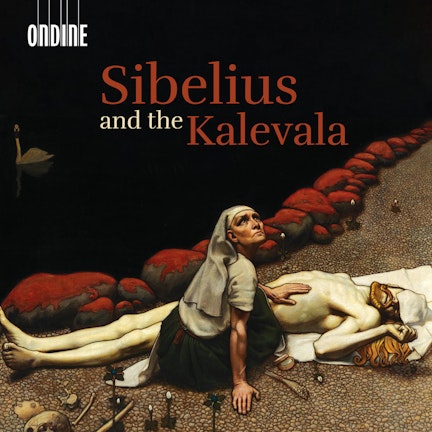
Sibelius and the Kalevala
Jean Sibelius: Pohjola's Daughter, Four Lemminkainen Legends
Jean Sibelius: Pohjola's Daughter, Four Lemminkainen Legends
Sibelius: Finlandia; Luonnotar; Tapiola etc.
Sibelius: Tone-poems
Sibelius: Finlandia/Tone Poems
SIBELIUS, J.: Finlandia / Valse triste / Night Ride and Sunrise / Lemminkainen Suite / En saga (K. Sanderling, Berglund)
Sibelius: Finlandia / Pohjola's Daughter / The Oceanides / Tapiola / Lemminkainen Suite (Excerpt)
Sibelius : Karelia Suite, Pohjola's Daughter, The Bard, Finlandia & Tapiola