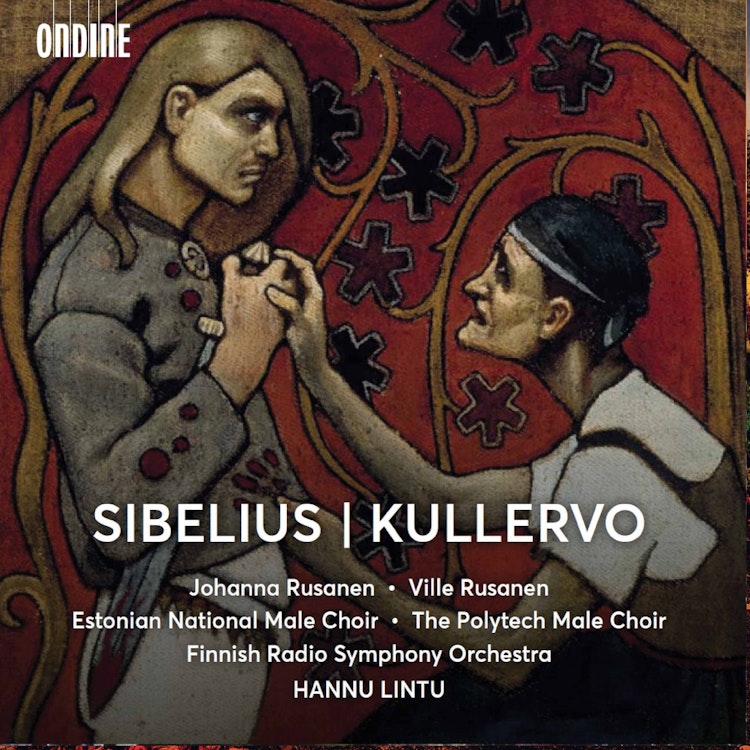
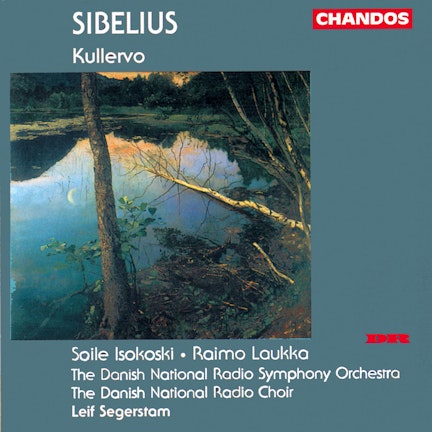
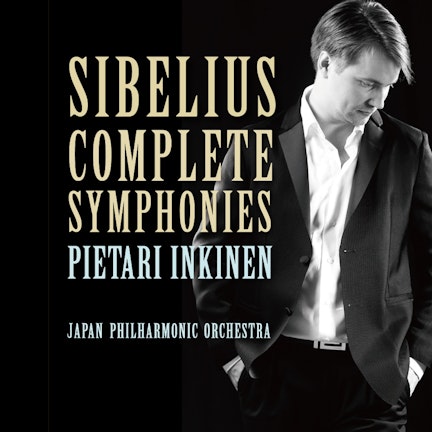
It was with the huge choral and orchestral work Kullervo that the young Jean Sibelius found not only fame, but also his voice as a distinctively Finnish composer. This five-part composition, premiered in 1892, tells the tale of the Kalevala, a Finnish folk epic. This recording is made by the Finnish Radio Symphony Orchestra, the Estonian National Male Choir and Polytech Male Choir, conducted by Hannu Lintu, and featuring vocal soloists Johanna and Ville Rusanen.
Featuring
Hannu Lintu
Johanna Rusanen-Kartano
Ville Rusanen
Finnish Radio Symphony Orchestra
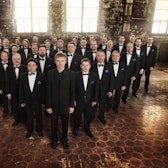
Estonian National Male Choir
The Polytech Choir
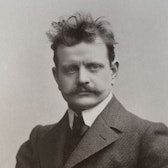
Jean Sibelius
Did you know?
1/7
Compositional Technique
Sibelius decided to use a male choir instead of a mixed choir for Kullervo to emphasize the music's austerity and ruggedness, and extended the symphony to five movements by adding an epilogue.
Composition History
Sibelius began envisioning a grand symphonic work in Vienna after being entranced by a performance of Bruckner's Third Symphony in late 1890.
Composition History
Sibelius was inspired to include vocal soloists and a choir in his symphony after hearing Hans Richter conduct Beethoven's Ninth Symphony in April 1891.
Composition History
Sibelius chose the tale of Kullervo, the most tragic character in the Kalevala, as the subject for his symphony in January 1892, driven by a personal desire to marry Aino Järnefelt, his fiancée.
Notable Performances
The premiere of the Kullervo Symphony on April 29, 1892, was a 'most unlikely triumph' given the work was completed last minute, the orchestra found the music alien, and Sibelius, at 26, had never conducted a symphony concert.
Composer's Artistic Vision
While abroad, Sibelius developed an ardent enthusiasm for the Kalevala, an epic poem from Finnish folklore, viewing it as 'quite modern' and 'all music, a theme and variations'.
Critical Reception
After its initial success, Kullervo disappeared from performance for decades, with its materials forgotten in conductor Robert Kajanus's bookshelf, and was not performed again until 1958, after Sibelius's death.
You might also enjoy...
Sibelius: Symphonies Nos. 1 and 6
Sibelius: Symphony No. 3 in C Major, Op. 52: I. Allegro moderato