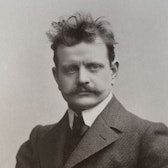
Sibelius composed his Fourth Symphony and other works in its immediate wake under the shadow of death, after being diagnosed with and successfully treated for cancer in 1908.
Performer Biography
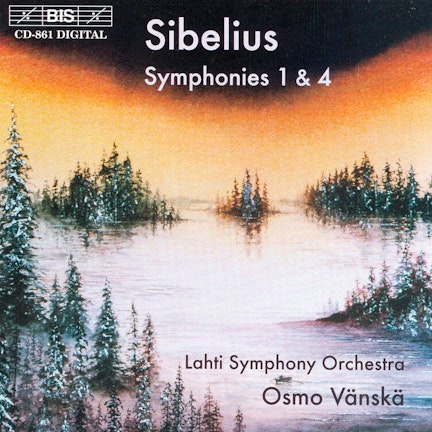
Osmo Vänskä, the conductor, significantly raised the international profile of the Lahti Symphony Orchestra through his notable interpretations of Sibelius's music.
Critical Reception
Sibelius's Fourth Symphony bewildered early audiences, being denounced as 'ultra-modern' in Sweden and even called 'cubist' by a New York critic.
Composer's Artistic Vision
The Kalevala, a collection of Finnish mythology, was a crucial source of inspiration for Sibelius throughout his life, to the extent that without it, he would not be the Sibelius we know.
Compositional Technique
The coda of Sibelius's Fourth Symphony contains a repeated cry that the composer explained as an allusion to Peter's three-fold denial of Christ.
Composer's Artistic Vision
Sibelius's symphonies, particularly the First and Fourth, reveal the furthest poles of his symphonic art, with the Fourth being exceptionally original and inward-looking.
Performer Biography
Osmo Vänskä, the conductor on this album, began his musical career as a clarinettist, holding a co-principal chair in the Helsinki Philharmonic Orchestra for several years.
You might also enjoy...
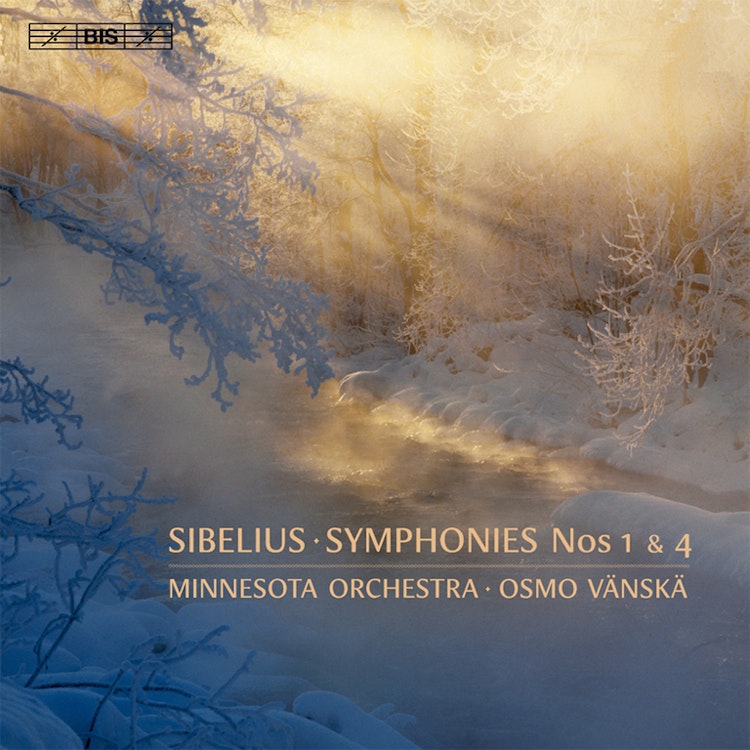
SIBELIUS: SYMPHONIES 1 & 4
Sibelius: Symphony No. 1 & Symphony No. 7
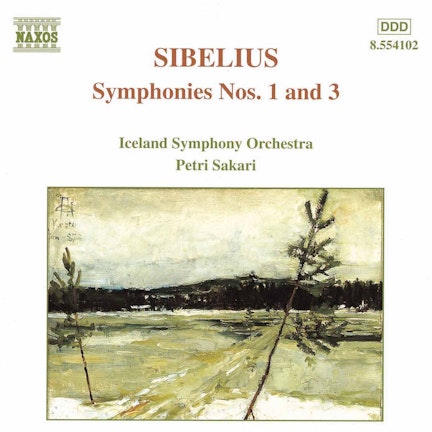
Sibelius: Symphony No. 1 & No. 3
Ferdinand Hiller: Symphony op. 67 & Symphony in F minor