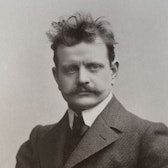
The Second Symphony originated from Sibelius's plans to compose a work based on Dante's The Divine Comedy, for which his friend Axel Carpelan raised funds for him to travel to Italy.
Performer Biography
The London Philharmonic Orchestra has a long association with Sibelius, dating back to the 1930s when it recorded several of his works under Sir Thomas Beecham.
Compositional Technique
The Seventh Symphony is a one-movement work that achieves organic unity through Sibelius's mastery of transition and control of simultaneous tempi, making it difficult to define where sections begin or end.
Historical Context
Sibelius's Second Symphony, coming after his work Finlandia, resonated with Finnish patriotic sentiment during a time of increasing Tsarist oppression, as Finland was still a 'Grand Duchy' of Russia.
Critical Reception
Sibelius's Second Symphony was an immediate success, with all four premiere performances in March 1902 selling out, and it remains his most frequently played and recorded symphony.
Interpretation
Paavo Berglund is known for his careful attention to balance and clarity, and his painstaking work on the score of the Seventh Symphony led to a revised edition and his willingness to alter orchestration for detail.
Performer Biography
Conductor Paavo Berglund is particularly known for his recordings of Sibelius's symphonies, having conducted the world premiere recording of Kullervo Symphony and recorded the complete cycle three times.
You might also enjoy...
Sibelius: Kullervo, Op. 7
Sibelius: Symphony No. 3, Op. 52
Sibelius: Symphonies Nos. 4 and 5
Sibelius: Kullervo
Sibelius: Kullervo, Op. 7
Sibelius: Symphony No. 2 in D Major, Op. 43, Symphony No. 4 in A Minor, Op. 63
Sibelius: Symphony No. 5, Op 82
Sibelius: Symphony No. 3 in C Major, Op. 52: II. Andantino con moto, quasi allegretto
Sibelius: Symphony No. 5
Sibelius: Symphonies Nos. 4 & 5
Jean Sebelius: Symphonies Nos. 4 and 5 (Berlin Symphony, K. Sanderling)