For the second volume in their cyle of Sibelius symphonies, Santtu-Matias Rouvali conducts the Gothenburg Symphony Orchestra in famous and lesser-known works by the Finnish composer. The beloved Symphony No. 2 in D major (1901) is paired with Sibelius's incidental music for King Kristian II, written in 1898 for a play by Adolf Paul.
Featuring
Santtu-Matias Rouvali
Göteborgs Symfoniker
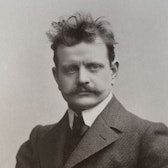
Jean Sibelius
Did you know?
1/7
Composition History
Sibelius began sketching his Symphony No. 2 in Rapallo, Italy, after escaping the Finnish winter and a period of personal and national turmoil.
Compositional Technique
Sibelius's sketches reveal that themes in his Symphony No. 2 were inspired by personal events, such as his daughter Ruth's recovery and the suicide of his sister-in-law, Elli Järnefelt.
Critical Reception
Despite Sibelius's private inspirations, his compatriots were determined to interpret the Symphony No. 2 as a political statement, with some conductors and composers assigning patriotic titles to its movements.
Historical Context
Sibelius's Symphony No. 2 was composed during a period of intense anti-Russian sentiment in Finland, following the 1899 February Manifesto which aimed to strip the Finnish parliament of its legislative power.
Composer Biography
Jean Sibelius's personal life was marked by tragedy around the time of composing his Second Symphony, including the death of his youngest daughter, Kirsti, from typhus.
Performer Biography
Santtu-Matias Rouvali, the conductor on this album, is Chief Conductor of the Gothenburg Symphony and Principal Conductor Designate of the Philharmonia Orchestra.
Recording & Production
This album is part of a complete Sibelius Symphonies recording project by the Gothenburg Symphony Orchestra and Santtu-Matias Rouvali for Alpha Classics.