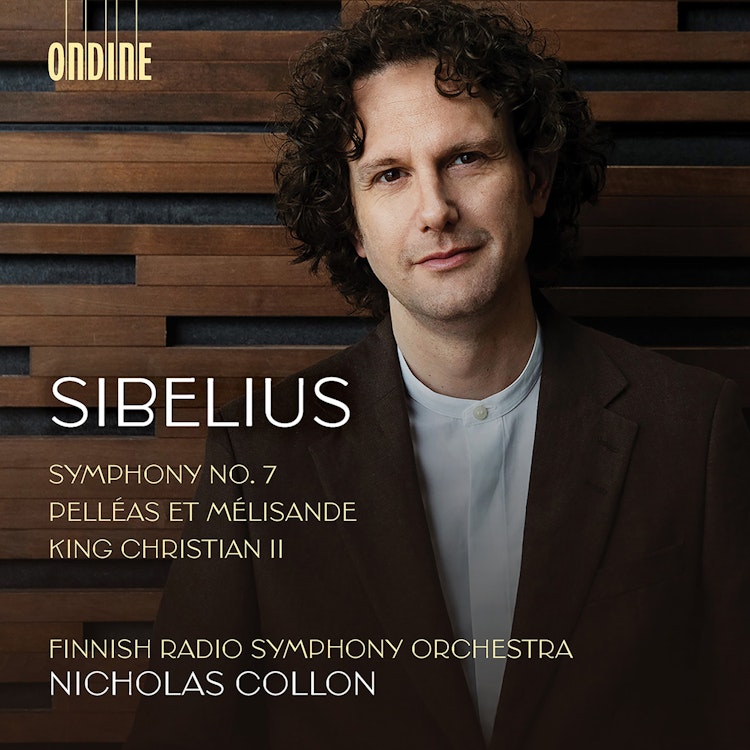
Sibelius: Symphony No. 7 in C Major, Op. 105 & Other Orchestral Works
5/6/2022, 15 Tracks, 1:11:38
Featuring
Nicholas Collon
Finnish Radio Symphony Orchestra
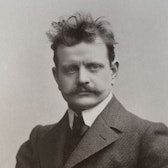
Jean Sibelius
Did you know?
1/7
Composition History
Sibelius's Seventh Symphony, his final symphonic work, was the result of a long and complicated creative process, with initial ideas dating back to 1914-1915.
Composition History
The King Christian II Suite was Sibelius's first published orchestral work and gained widespread performance abroad due to its popular style.
Composer Biography
Jean Sibelius, the composer, noted in his diary in 1924 that his self-criticism was escalating to 'impossible heights' as he aged.
Compositional Technique
Sibelius's Seventh Symphony is unique for its single-movement structure, a decision he made in the later stages of its composition in 1923.
Performer Biography
Nicholas Collon is the first non-Finnish conductor to hold the post of Chief Conductor of the Finnish Radio Symphony Orchestra, starting in August 2021.
Cultural Impact
Maurice Maeterlinck's play Pelléas et Mélisande, for which Sibelius wrote incidental music, inspired numerous composers including Debussy, William Wallace, Schönberg, and Fauré.
Historical Context
Adolf Paul's play King Christian II, for which Sibelius wrote incidental music, features a historical figure known as 'Christian the Tyrant' in Sweden for the Stockholm Massacre of 1520.
You might also enjoy...
Bizet: L'Arlesienne Suite - Symphony No. 1
Bizet : Symphony in C, Jeux d'Enfants, Roma
Bizet: Symphony in C - L'Arlésienne Suites Nos. 1 & 2
French Spectacular
French Spectacular
Bizet: Carmen Suite, Symphony No. 1 in C Major & L’arlésienne Suite No. 1
Bizet: Symphony in C Major, Carmen Suite No. 1 & L'Arlésienne Suites
Madetoja: Orchestral Works, Vol. 1
Schmitt: Suites from Antoine et Cléopâtre & Symphony No. 2
Grieg: Peer Gynt Suites Nos. 1 and 2
Bizet: L'Arlesienne Suite Nos. 1 & 2 - Fauré: Masques et bergamasques Suite - Gounod: Faust