Siegfried Reda was connected to the Confessing Church, a movement of Christian resistance against the Nazi dictatorship, through theologian Ernst Käsemann.
Historical Context
After 1945, works created in the tradition of moderate modernism were politically viewed as 'afterbirths of the Third Reich' and dismissed as reactionary.
Interpretation
Siegfried Reda's playing was characterized by 'structural colorfulness,' using registrations that aimed to sonically reproduce the compositional structure of a piece, similar to the methods of Arnold Schoenberg and Anton Webern.
Historical Context
The works on this album belong to 'moderate modernism,' a form of Neoclassicism that emerged in the late 1920s by avoiding radical elements.
Performer Biography
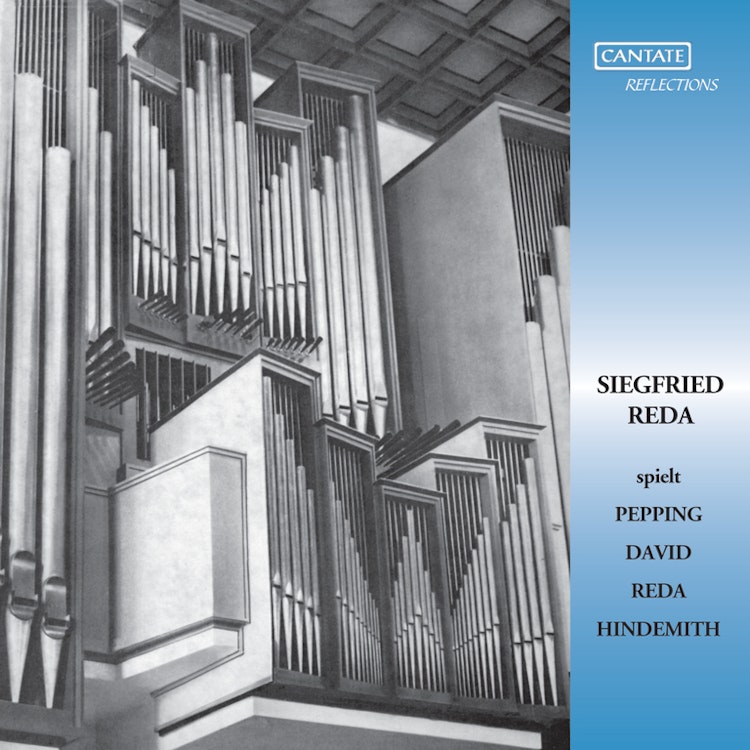
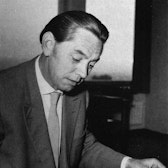
Siegfried Reda, the organist on this album, was deeply impressed by the St. Matthew Passion at age nine, which inspired his first attempts at composition.
Historical Context
Some of the older works on this album were written during a time when composing was regulated by the German state, which persecuted any radical work as 'degenerate' or 'cultural Bolshevism.'
Recording & Production
The recordings of Siegfried Reda's playing were made shortly after the completion of the 1959 Schuke organ in the Petrikirche in Mülheim (Ruhr), documenting its state at that time.
You might also enjoy...
Deux siècles d'orgue (Chapelle Royale du Château de Versailles) (Bouvard, Desenclos, Espinasse, Robin)
Organ Spectacular - Respighi Suite Lovelock Sinfonia Poulenc Concerto Langlais Concerto No. 3
Music für Ogel und Posaune aus dem Kaiserdom Frankfurt/ Main
L'orgue Dom Bedos de Sainte-Croix de Bordeaux
Organ Recital: Nolan, Joseph – Boellmann, L. / Elgar, E. / Thalben-Ball, G. / Liszt, F.
Johann Nepomuk David: Selected Organ Works Vol. 2
Lunéville, France 1751
SympHohmania
Bates, Robert: In Recital at Lagerquist Hall
Organ Recital: Britton, David - Conceicao, D. / Bach, J.S. / Corrette, M. / Gherardeschi, G. / Lefebure-Wely, L. / Vierne, L.