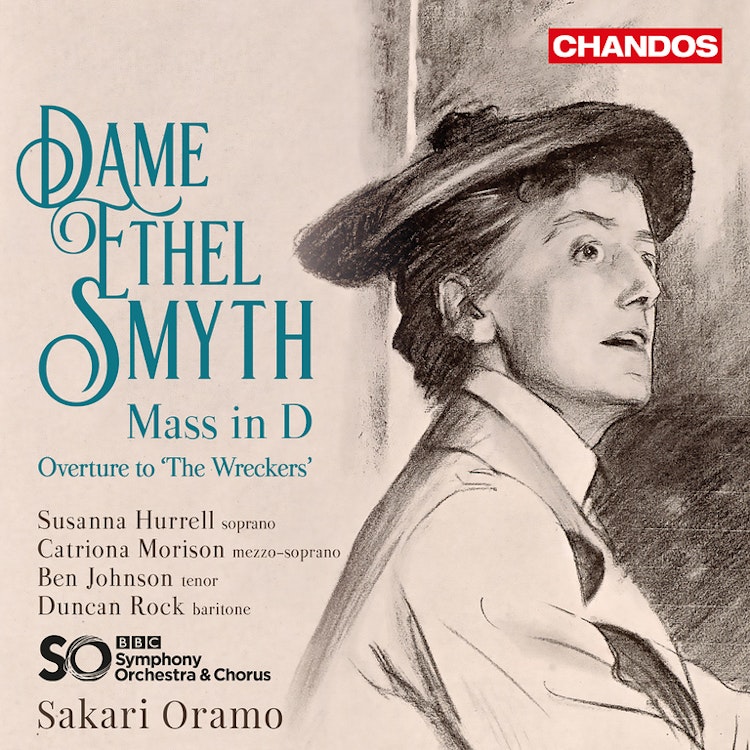
Smyth: Mass in D Major & Overture to "The Wreckers"
9/27/2019, 7 Tracks, 1:10:45
Dame Ethel Smyth was one of Victorian Britain’s most important composers, as well as a prominent suffragette. Among her most significant works is the Mass in D. It is for soloists, choir and orchestra, and unusually concludes with the joyful Gloria. The BBC Symphony Orchestra and Sakari Oramo also play the overture to The Wreckers, Smyth’s best known opera.
Featuring
Sakari Oramo
Susanna Hurrell
Catriona Morison
Ben Johnson
Duncan Rock
BBC Symphony Orchestra
BBC Symphony Chorus
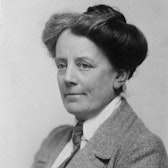
Ethel Smyth
Did you know?
1/7
Compositional Technique
Ethel Smyth's Mass in D is scored for a double choir, four vocal soloists, and a large orchestra, including double winds, extensive brass, percussion, and organ.
Critical Reception
J.A. Fuller-Maitland, writing in The Times, praised Ethel Smyth's Mass in D as a great achievement, noting its "virile, masterly in construction and workmanship" qualities.
Composition History
Ethel Smyth's Mass in D was partly composed while she was vacationing on Empress Eugénie of France's yacht at Cap Martin.
Recording & Production
This recording uses 24-bit / 96 kHz technology, which offers a dynamic range up to 48 dB greater and 256 times the resolution of standard 16-bit recordings.
Notable Performances
The premiere of Ethel Smyth's Mass in D in 1893 at the Royal Albert Hall was secured with the help of Empress Eugénie, who paid for its publication and promised to attend.
Composer Biography
Ethel Smyth, the composer, studied privately with Heinrich von Herzogenberg in Leipzig, after finding the Conservatory's teaching underwhelming.
Critical Reception
George Bernard Shaw, the famous playwright and critic, compared the Gloria from Ethel Smyth's Mass in D to an opening chorus in comic opera, finding it to have an "underlying profanity."
You might also enjoy...
Arnold Overtures
Gershwin: Rhapsody in Blue (1925 Piano Roll); An American In Paris; Broadway Overtures [Expanded Edition]