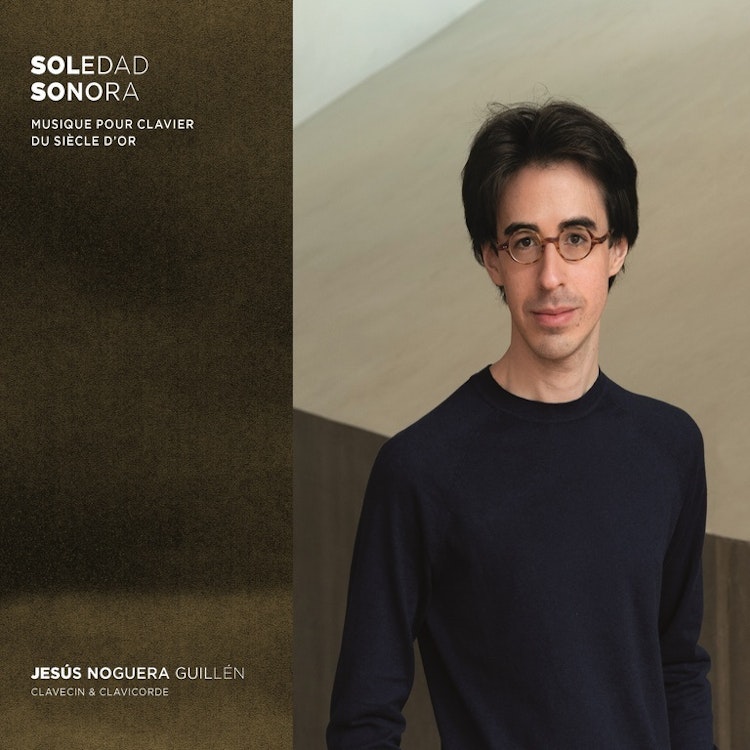
Soledad sonora: Musique pour clavier du Siècle d'or espagnol
11/22/2019, 19 Tracks, 59:06
Featuring
Jesús Noguera Guillén
Antonio de Cabezón
Tomás de Santa María
Joan Magrané Figuera
Did you know?
1/7
Composition History
Tomás de Santa María's 'Arte de tañer fantasía' (1565) is a key 16th-century keyboard treatise, approved by Antonio de Cabezón, and includes pedagogical examples performed on this album.
Composer's Artistic Vision
The album's title, 'Soledad Sonora' (sounding solitude), is inspired by St. John of the Cross's concept of a 'mute music' that appeals to the soul's spiritual powers.
Historical Context
The album features music from the Spanish Golden Age (16th to mid-17th century), a period of immense artistic and intellectual flourishing in Spain.
Composition History
Cabezón's son, Hernando, published his father's works in 1578, noting that many were originally lessons for students, adapted to their skill level.
Interpretation
The performer, Jesús Noguera Guillén, chose to record on harpsichord and clavichord to evoke the intimacy of the creative act, as these instruments were more widely used than the organ in Cabezón's time.
Composer Biography
Antonio de Cabezón, organist to Charles V and Philip II, was blind from childhood but was said to have a "marvelous vision of the soul" for music.
Compositional Technique
The album includes 'diferencias', a Spanish variation form where each section makes successive changes to the same musical theme, often based on popular songs or ostinato basses.
You might also enjoy...
John Come Kiss Me Now. Virginal Music of William Byrd
Fitzwilliam Virginal Book, Vol. 1
Soler: Harpsichord Sonatas, Vol. 1
Bach, J.S.: Harpsichord Music by the Young J.S. Bach, Vol. 2