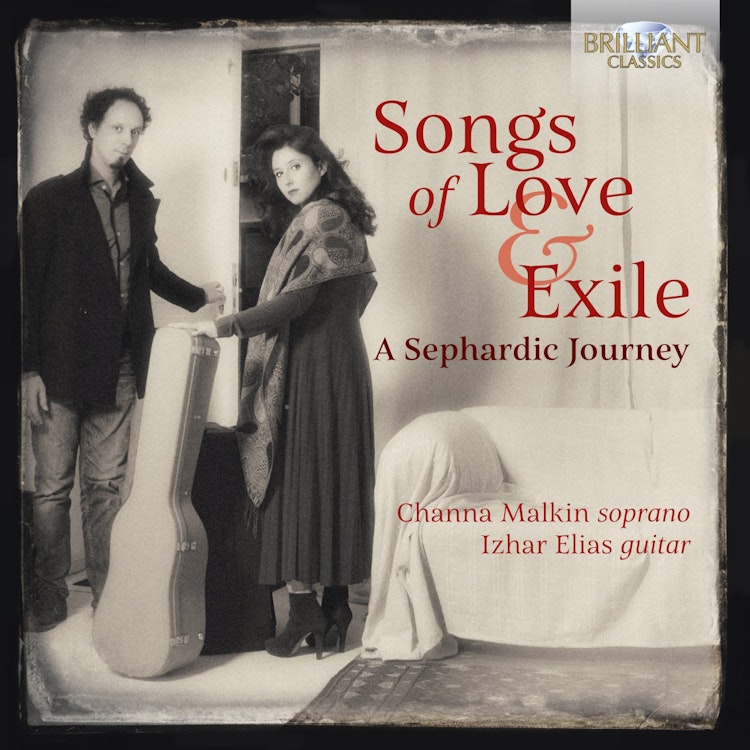
Mario Castelnuovo-Tedesco fled to the United States before World War II after his music was banned due to Italian Racial Laws, and later became a prominent guitar composer in Hollywood, teaching figures like Henry Mancini and John Williams.
Historical Context
Sephardic Jews, whose homeland was Spain and Portugal (Sepharad), enjoyed religious freedom during the Moorish occupation, participating actively in cultural and intellectual life alongside Muslim and Christian peers.
Composer's Artistic Vision
Mario Castelnuovo-Tedesco, an Italian composer, found his Jewish heritage a major source of inspiration, especially as fascism and antisemitism spread through Europe.
Interpretation
Since only the words and melodies of Sephardic songs were preserved, their arrangement and interpretation are largely left to individual performers, with modern renditions ranging from historically researched to classical and contemporary folk styles.
Historical Context
The language of Sephardic folk songs was Judaeo-Spanish or Ladino, a mix of Old Spanish dialects and Hebrew, similar to Yiddish in Eastern Europe.
Cultural Impact
Sephardic folk songs, called romanzas, were passed down through generations of women and covered all aspects of life, mixing medieval Spanish tales, Jewish liturgical melodies, and Arabic melodic ornamentation.
Composer's Artistic Vision
Castelnuovo-Tedesco felt a strong connection to the Spanish-Jewish poet Moses Ibn Ezra, who also experienced exile, and was inspired by the universal themes in Ibn Ezra's Divan to compose a significant work for voice and guitar.
You might also enjoy...
The George Gershwin Songbook
Throughlines: New Chamber & Solo Works
The Silver Hound & Other Songs
Brahms: Complete Duets & Quartets
You Did Not Want For Joy
Weir, Judith: On Buying A Horse / Songs From the Exotic / Scotch Minstrelsy