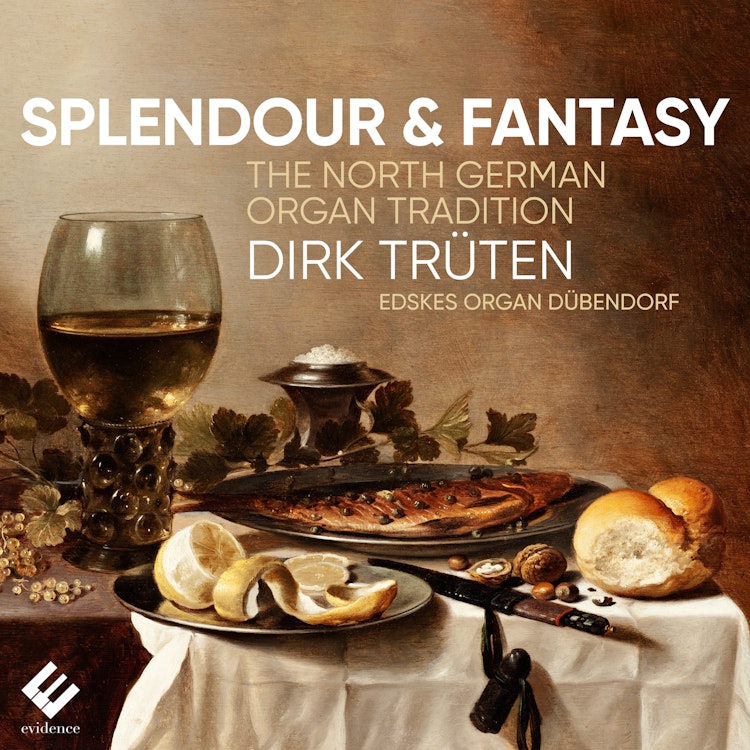
Splendour & Fantasy: The North German Organ Tradition
8/19/2022, 23 Tracks, 1:08:31
Featuring
Dirk Trüten
Hieronymus Praetorius
Matthias Weckmann
Franz Tunder
Dietrich Buxtehude
Georg Dietrich Leyding
Christoph Wolfgang Druckenmüller
Nicolaus Bruhns
Did you know?
1/7
Composition History
Franz Tunder, organist at St. Mary's, Lübeck, entertained businessmen with his organ playing while they waited for the stock exchange to open, leading to the development of large-scale chorale fantasies.
Instruments
Michael Praetorius, a German composer and music theorist, wrote in 1619 that the art of the organ had reached such perfection that nothing further could be added.
Instruments
The organ used for this recording, built in 2014 by Bernhardt Edskes, is based on the style of Arp Schnitger, the most important North German organ builder of his time.
Historical Context
The Magnificat, an important part of Vespers, was central to Lutheran liturgy, explaining why Magnificat settings were at the very beginning of the North German organ school.
Composer Biography
Dietrich Buxtehude, a prominent North German organist and composer, took over Tunder's position at St. Mary's in 1668 and continued his 'Abendmusiken' concerts.
Instruments
A special feature of larger North German town church organs was their independent pedal divisions, which were equal in sound to the manual 'Werk' and often framed it in side 'towers'.
Historical Context
The North German organ tradition flourished between the 16th and 18th centuries, fostered by trade within the Hanseatic League and the Lutheran-style Protestantism.
You might also enjoy...
Bach, J.S.: The Organ Works
Bach, J.S.: Complete Organ Works
St. Paul`s Organ Frankfurt - A Musical Portrait
Bach: The Organ Works, The Early Years (2/3)
Bach, J.S.: The Organ Works
Die Heitere Orgel (Eberhard Lauer an der Orgel der Marienkiorche, Hamburg)
Complete Organ Works & Other Keyboard Works 4: Prelude & Fugue In G Major BWV 550 And Other Early Works. Vol.4 (Bach)