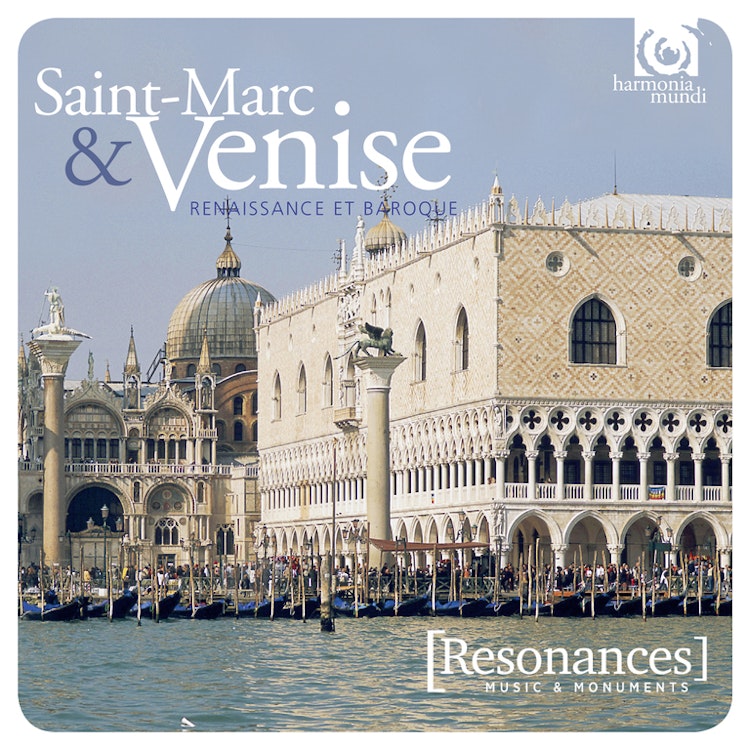
St Mark's & Venice: Sacred Music at the Heart of the Baroque Revolution
11/4/2016, 36 Tracks, 2:09:54
Featuring
Bruce Dickey
Charles Toet
Philippe Herreweghe
Paul Van Nevel
René Jacobs
François Fauché
Jean-Marc Aymes
María Cristina Kiehr
Concerto Palatino
Ensemble Vocal Européen de la Chapelle Royale
Huelgas Ensemble
Concerto Vocale
Nederlands Kamerkoor
Les Arts Florissants
Concerto Soave
Giovanni Gabrieli
Hans Leo Hassler (von Roseneck)
Claudio Monteverdi
Claudio Merulo
Did you know?
1/7
Compositional Technique
Giovanni Gabrieli's Sacrae Symphoniae, published in 1597, illustrates the transition from Renaissance to Baroque, with instrumental canzonas featuring dances and virtuoso runs projected spatially by a rich instrumentarium.
Historical Context
Venice became the most important center for music publishing in Italy during the Renaissance, attracting many musicians after the sack of Rome in 1527 and the siege of Florence in 1529-30.
Compositional Technique
The 'eco in lontano' (distant echo) technique, used in works like Monteverdi's Vespro della Beata Vergine, involved placing musicians far from the main choir, sometimes hidden, to surprise listeners.
Composer's Artistic Vision
The freedom of thought in Venice encouraged the integration of secular music elements, such as dances and theatrical songs, into sacred compositions, a process called 'sacralisation'.
Compositional Technique
Adrian Willaert, a composer at St Mark's, developed the famous Venetian polychoral style, which used the basilica's multiple choir areas and galleries to present various choral and orchestral groups.
Composer Biography
Hans Leo Hassler, a German composer, came to Venice in 1584 to learn about new musical trends, and Heinrich Schütz later studied with Giovanni Gabrieli and met Claudio Monteverdi in Venice.
Composer Biography
Claudio Monteverdi was very satisfied with his post at St Mark's, not only for job security but also for the freedom to compose and perform music outside the basilica.
You might also enjoy...
Natale veneziano
Motets
Splendours of the Gonzaga. Sacred Music from Wert to Monteverdi